Oct 25, 2026 | ktru
Written by Margo Gee
Have you ever driven through a West Texas sunset? If so, you might have an idea of what it is like to listen to Hermanos Gutiérrez.
Being only anecdotally familiar with Hermanos Gutiérrez through their song “Low Sun”, when I walked into 713 Music hall and saw a sea of chairs and heads set out where time and time before had stood the usual throng of bodies, I realized I was in for a very different concert than my usual.
The lead singer of Y La Bamba, Luz Elena Mendoza (a repeat guest on popular music beacons like Tiny Desk and KEXP), sat down with a notebook of lyrics, a friend, and a guitar to welcome us in. Performing in Spanish, she curled stories about interpersonal relationships around the ears of the crowd and settled us in for what was surely going to be a meditative evening. Though her music was a comfort performed in a duo, I wonder what her music is like with a more robust instrument section. Hers were the last sung words I heard that evening.
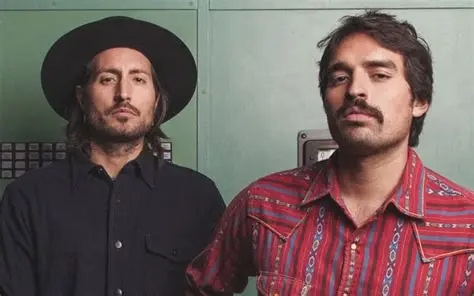
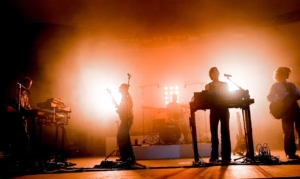
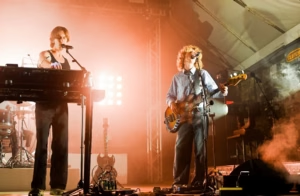
After a brief break, the brothers walked on stage. Alejandro (lap steel guitar, guitar) dressed somewhat soberly compared to his brother Estevan (guitar, bongos), who was adorned in brighter colors and a hat. And they began to play.
Hermanos Gutiérrez captures the rolling hills and curves of a sunset drive in the American Southwest, the hum of a motor on that long, sun-baked highway with hours left on the drive to Somewhere. Their sound is topographical, and as such is a truly delicate thing. Each song has a narrative quality to it as it develops, even wordlessly, and can really make you feel like a stationary traveler. And they know it too- more than once throughout the instrumental concert Estevan, the younger of the two brothers, invoked the desert in his interludes between songs. Unfortunately, just like the American Southwest, you rapidly realize that there is a whole lot of the same view, for miles and miles.
While their opener, “Thunderbird” (a purported favorite of theirs), and other standouts such as “Tres Hermanos” and their accelerando performance of “Low Sun” were great outward spirals of melodies and really pulled me out of my seat, as the concert progressed, I found myself surprised and disheartened that the melodies and tempo became almost uniform, even between songs from different albums. Their music can and will make you feel as though you are traversing vast spaces, even universes, from your seat. For that to feel samey? Chilling.
That being said, I feel the brothers really shine when the looping machine comes out. As in their performance of “Cumbia Lunar” and in their beautiful, swimming encore, they proved that they know how to dynamically build off of their own created sound, and I only wish their setlist had allowed them to showcase that ability more. The looping machine also cut through the sameness I was feeling, allowing for a more complex construction of melody.
Throughout their discography, the brothers use muted strums of their guitar, or chops, as a form of percussion. In album form, this practice was mixed such that it did not distract from the rhythms flowing out of their guitars. In concert, it was a great heartbreak of mine to hear that these chops were not quieted at all and were like a crashing pickaxe across the measures of their music, almost stabbing the listener. By far the loudest part of several of their songs, this mixing mishap utterly swallowed the rhythm of the gently flowing guitar they infused throughout their set. I truly can’t understate how jarring it was in such a gentle sonic environment :(.
Hermanos Gutiérrez are a band with an expertly refined sound and a real ability to pull you into a grand voyage across arid parts unknown. In a concert setting, though, without some of the instrumentation present on their studio albums, this desert sound becomes too literal: as the vast, ancient ocean rolls outward before you, features you found remarkable at the beginning of your journey catch your eye no longer as you cast out towards the setting sun.
Oct 23, 2026 | ktru
Written and Photos by Israel Lerma
To start this review, I must admit that Vince Staples is personally one of my favorite rappers of all time. I even dissected his new album, Crybaby, on my YouTube channel. He is the new generation of Childish Gambino, with continuously evolving sounds, serious topics at times, great rapping and singing, a similar album cover, and even his own show. I love Vince in every way. His show was just recently canceled, but I quite enjoyed it. While Gambino surpasses him in almost every category, the boy Vince is special and is still in my top 15 rappers. Now, when I got accepted for media coverage of Vince at the Bayou Music Center on Wednesday, I was excited. Out of all the shows I have covered, he is in my top 3 favorite artists to cover, so you know the expectations were high. The concert took place on October 21st, a random Wednesday night, at the Bayou Music Center.
 Now, the first thing to note is that the merch was just disappointing—nothing particularly special, just very basic shirts anyone can make. I still bought one just 'cause of Vince's name, but they are so simple and have so much potential, especially with his new album. Also, my first impression was that this venue was at like 30% capacity... like, that sucked. The venue's balcony was closed, which rarely happens, 'cause ticket sales were under 500 out of a capacity of like 2,000+. That is so tragic. I don't know if it was the date or if people just don't love Vince like that, but that really killed the vibe a little.
Opening for Vince was this band called Provoker. This band was just the definition of okay. No offense, I have nothing good or bad to say. They were just playing some rock music on the heavier side that the fans couldn't care less about. Like seriously, no one seemed interested at all in their performance, which was just alright. The lead singer was great at times when he held his notes and sang his heart out, but nothing to be amazed at. I really would've preferred a Kenny Mason or a Mavi, who are real, genuine soul rappers. But Provoker opened the Texas show due to location, and their sounds are heavily featured in Vince's new album, Crybaby.
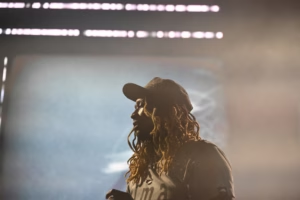
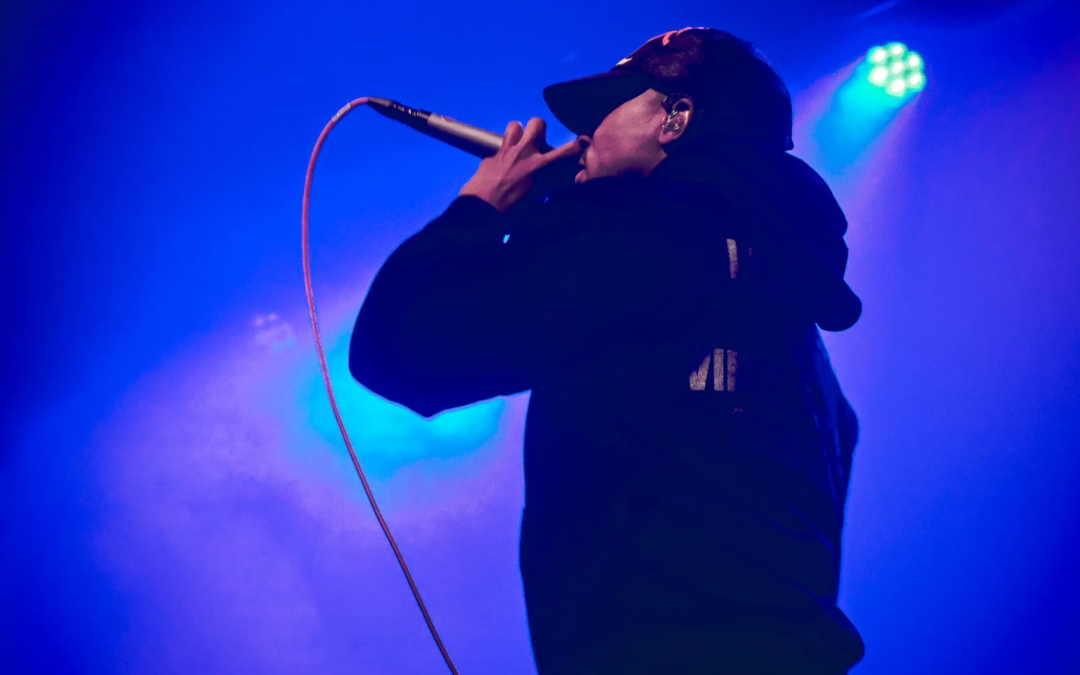
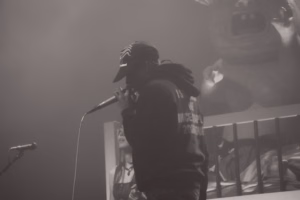
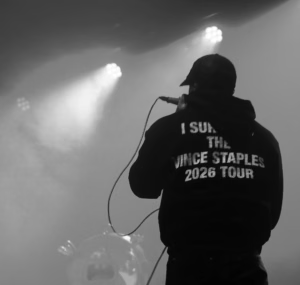
Now, Vince came out to "God Bless America," which was an unexpected opener, but it did the job. He even did some a cappella, which was quite interesting. A very important thing to note was the use of the band throughout the whole show. There was a drummer, a bassist, and an electric distorted guitar player who was, like, in high school, according to Vince. After moving on to the second song, I just knew it was not gonna be an ideal night. The lighting was so not good, with very dark lighting for everyone or random neon lights that flashed rarely. Vince himself was wearing his merch hoodie and a hat at the same time, which made it even harder to see his face.
Moving on to bigger complaints, oh man. The use of the band is a nice idea, especially for this album tour. This new album, Crybaby, which I won't go into too much detail about since I already dissected it (watch my video), is punk rock/rap that criticizes America. The studio album itself is beautiful and one of my favorites of the year. He genuinely made this new sound surprisingly work in a way that addresses serious societal flaws in America. But MAN, the live band, while a nice idea for this genre of album, was tooooo, toooo, tooooooo loud. Like, the drums were not too bad, but they were basically playing loudly the whole night. The bassist was surprisingly chill, but still, it was a little too much. But the guitar, the electric distorted sound, needs to be toned down like crazy. It just did not sound great sometimes with its intensity. But you want to know the worst part? Vince Staples' microphone levels were so low, it felt like they were barely reaching 60 decibels. Like bro, I could barely hear him rap/sing around half the time. EVEN when he talked to the audience, I genuinely could not understand bro. Now, I've been to 38 concerts, and this is the first time I have experienced mixing issues, and this issue genuinely brought down the night a lot.
Now, to move on to some highlights, the setlist was genuinely pretty good. It is a little disappointing since he only picked 3 albums out of seven to play, and he did not even play his most popular song, "Norf Norf." Both of these facts are so surprising because why? You have only one song in the 100 million+ range, and you're not playing it... that's a shock. But again, the songs he did pick were, in my opinion, his best songs. The order of the setlist was quite weird, but still, it was cool. "Shame on the Devil," "Nothing Matters," and "When Sparks Fly" are all bangers that he delivered on. While these primarily rapping songs sounded different with a band, it was still kinda nice with these instruments. While it was hard to follow his raps, it was a vibe that I could rap along to. Also, when I did understand what he was saying, his sorta fan engagement was pretty cool because he was actually interacting and making us laugh. While he does have a reputation for taking it too far, which he did with a certain joke, that is just how Vince is. For like 3 minutes, it felt like a stand-up comedy set, which was quite cool.
Anyways, that was my review. I know I went pretty harsh, but I still had fun, honestly. Just this one simple improvement, and maybe even just a smaller venue, would've fit better.
Rating Vince Staples' Show, Letterboxd Style
 Setlist - .75 --> Great songs, very weird order, and no love for the other albums like Big Fish Theory or his self-titled album, which is wack.
- Stage Presence - .75 --> He had the confidence for sure, did talk to fans, and joked around a lot. Pretty cool. The band stayed still for the most part, with basic movements. Vince did move a lot, though.
- Performance - .75 --> The audio levels bring this down. Also, since the show barely sold, it felt like Vince lost a little inspiration...
- Audience - .5 --> Yeah, it was okay. Nothing crazy. There were some real fans, some fake ones. No one moshed, and people barely moved.
- Overall Experience / Vibe - .5 --> I saw my boy Brandon randomly, which was cool. In the photo pit, I did not perform as well, but that is on me. I rapped and sang along to a lot of the songs, which was pretty cool.
- Total: 3.25/5 Stars
Oct 20, 2026 | ktru
Written and Photos by Poema Sumrow and Will Howley

The intimacy of the House of Blues’ Bronze Peacock was the perfect place to introduce Shallow Water and This Is Lorelei to Houston. The room was dark, slightly eclectic, and homey, with low lighting, chandeliers, and an excess of framed artwork on the walls.
To begin the night, Shallow Water took the stage, setting the scene for what was to come with This Is Lorelei. Our initial impression of their melodic and lyrical composition was a slow core, shoegaze-esque, dark ambient vibe that, pieced together, created a very enjoyable listening experience. Most of the songs were either longer than five minutes -->
 like Ativan, Sadie, and Angels) or played back-to-back in a seamless fashion. This fluidity gave the impression of a continuum, as the ambiance flowed in a single journey rather than starting and stopping again. When songs would appear to be coming to a close, the band would keep the momentum going and, without skipping a beat, transition into the next song.
 Most notably, Shallow Water relied on complex, unconventional rhythms and unique time signatures to create this listening experience. This method of creating rhythm is most akin to “math rock,” a genre characterized by complex, atypical rhythms and counterpoints—combining two distinct melodies with different rhythm and shape to create harmony. Notable bands in this category include American Football and close peers in the Prog Rock genre, such as Yes and Rush. Adding to the progressive nature of their chord progressions was the lead guitarist's use of open tunings on his electric guitar. Furthermore, both the lead guitarist and drummer used looping to create layers in melody and rhythm, adding to the ambient nature of their performance. Their opening set was the perfect length, set the right vibe, and created just enough energy to get the audience excited for The Is Lorelei.
Nate Amos’s arrival on stage felt like your best bud grabbing his guitar and a PBR to play you some songs he just wrote. The presence of him and his band was comfortingly casual. We felt like we were at a dive bar somewhere north of Texas, maybe Colorado. Not much of an introduction was given before Nate jumped into “Where’s Your Love Now”—a single from This Is Lorelei’s critically acclaimed breakout album, Box for Buddy, Box for Star. It became apparent that his live performances of his songs were going to sound a bit different from his recorded versions, skewing more acoustic.
Standouts of the show included “Oh No Now My”—a standout from their recent album The Singer in My Band—“Holo Boy”—a throwback—and “Two Legs.” For us, however, the concert culminated with their performance of “I’m All Fucked Up.” This performance electrified the room as we gleefully watched Amos attempt to enunciate every word in what is undoubtedly the most lyrically dense songs in their discography. The music got everyone up and dancing, including the woman next to us, who was barefoot and in full lifeguard garb.
The concert concluded with Will’s favorite song, Dancing in the Club. Notably, This Is Lorelei’s live version of this track sounded much more like the MJ Lenderman remix than the original recording, perhaps a nod to the latter’s succession in popularity. All in all, the setlist was 18 songs long, despite earlier shows in his tour only being 10 songs long. Maye This Is Lorelei just really likes Houston. We definitely loved them!
Oct 17, 2026 | ktru
Written and Photos by Chloe Diehl

During the ACL Afterparty concerts, Parcels played a nearly sold-out show at Stubb’s B-B-Q during their USA and Europe tour for their newest album, “LOVED”. To put it mildly, this was the best concert I have ever seen. Huge credit goes to Stubb's and ACL for creating the perfect event to experience such a special performance.
Parcels is a must-see band live. With no production elements or added features on stage, each member's musicality is so magical that the audience is locked in a funkadelic hypnosis.
Opening for Parcels was Velvet Trip, an Australian psychedelic rock group that set an incredible tone for the evening. The group was trippy and ethereal. The lead singer’s voice offered a sweet contrast to the heavy synthesizers and distorted guitars.

The song that I loved the most was “The Bends.” This song had more of a groove reminiscent of Parcels’ “Hideout,” with a clean disco bass line and clean chord progressions played in the upper frets. The perfect start before Parcels’ concert.
This performance marked the final day Velvet Trip joined Parcels on their USA and Europe tour, making it an emotional show. To celebrate their final opening act for Parcels, Velvet Trip joined them on stage for the final song of their main set, “Finallyover”, creating an unforgettable resolution to the night.

When Parcels took the stage, the entire energy shifted into something truly extraordinary. From the moment they stepped out, the crowd was instantly swept up by their electric power with the opening songs, “Tobeloved” and a shorter version of “Ifyoucall.” They came out in relaxed clothing, letting their musical ability take center stage without fancy production gimmicks.
With no stopping points between songs, the set felt like one continuous musical journey. Every track bled seamlessly into the next, with incredibly crisp, clean transitions. They effortlessly blended disco, synth-pop, and rock into a uniquely captivating soundscape. They kept the high energy of “Gamesofluck” into “Sorry” by making the instrumentals more club-like and dancey.
A standout moment of the night was their mesmerizing cover of "Nightcall" by Kavinsky, reworked with their signature style. This song is tough to cover because of its many moving parts and synthesizers. Yet Parcels mastered every detail, which only deepened my respect for their musicianship.

Parcels has been the most defining band of my college years. Before matriculating at Rice, I was a total mess. I was nervous about the demands of my classes, keeping up with other bright students, what my social life would be like, and other hedonistic worries.

The night before I moved into my dorm, I was lying in bed at home, soaking in the fact that tomorrow would start a pivotal chapter. My Spotify recommended the song “IknowhowIfeel.” The song has a simple and repetitive verse. The bass was sweet and groovy. The guitar riff was crisp. The keys were airy. It was fresh, and I suddenly relaxed as I dissected each instrument.
Suddenly, the keys built to a crescendo and led into an uplifting chorus with the lyrics, “But, oh, there’s a place I need to go, over the end of every road, where I can feel it on my own.” The perfect message for someone about to embark on a new adventure.
From that moment, I became obsessed with the band. They rocked a cool European look while still embracing their Australian roots. I changed up my wardrobe, trying to match the confidence and funky aesthetic of the band members (which is a hard thing to do in Houston, TX).

The band shaped me into the person I am today, sparking my deep dive into the inner workings of the music industry. Beyond just playing their songs on repeat, I found myself studying their independent roots, their approach to live performances, and how they climbed to fame. That initial spark inspired me to explore music marketing and artist management, turning a simple love for their sound into a lifelong passion for the craft
and business behind it.
While I hold this group close to my heart, I want you to know my feelings shouldn’t make you dismiss this band. It's amazing to see how they have built such a massive listenership among fans who are in awe of their musical talent. Parcels, thank you for an unforgettable night and for delivering a performance that truly lived up to everything your music has meant to me over the years.

Oct 14, 2026 | ktru
Written and Photos by Chloe Diehl
Last Sunday, I attended Palace’s concert at the House of Blues with Amy Lam, former KTRU Rice Radio Creative Director. To be frank, we didn’t know much about Palace. I knew the hit song “Live Well” and loved the motivating, soulful ballad. However, I never got the chance to listen to the rest of their discography. Recently, Palace has gained a lot more listeners and has appeared at major festivals across America, including Austin City Limits. I was excited to see what the fuss was about. Amy, always down to listen to new groups, joined along for the adventure.
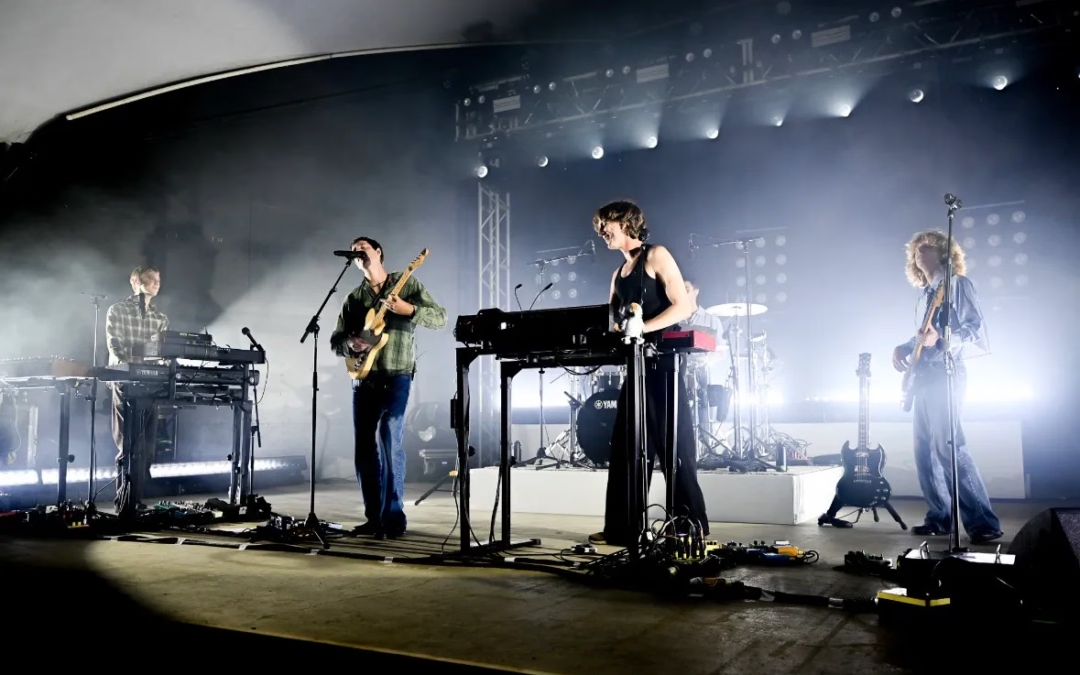
 As we squeezed through the packed front of the crowd, we were astounded by the captivating opening act. It’s a humble one-man band, Rollo Doherty. This artist is a true jack-of-all-trades. He is a London-based singer-songwriter, multi-instrumentalist, producer, filmmaker, illustrator, and animator. He is also known for being the frontman of the band ISLAND.
Doherty sang while playing acoustic guitar. His songs were unique because he used a loop pedal to play intricate riffs he strummed with a small bow. His serene folk lullabies almost reminded me of the upcoming Irish musician, Dove Ellis. With only one instrument, his atmospheric songs filled the concert hall. I was in awe to see his incredible gusto.
Palace came on with the frontman dramatically spotlighted the whole time. Like Doherty, the band members came humbly dressed in casual outfits fitting for a campsite. The frontman’s guitar skills were exceptional. He could seamlessly switch from a strong chord progression to throwing the pick out and fingering an elaborate lick.
My favorite song Palace played was no surprise: “Live Well”. The frontman prompted the audience to sing along as he accompanied them on guitar. I loved hearing a familiar song, and I also loved his sweet, genuine crowd engagement.
Overall, I thought the band sounded crisp and polished. Each band member had impressive technical talent. However, honestly, I don’t know what was more eventful: the lively metro ride to the venue or the concert. Palace felt a little too bland for both Amy's and my palate. We typically gravitate towards musicians that are more unique and avant-garde, which is why we couldn’t pinpoint anything distinctive about Palace compared to some of our favorite artists. However, they still drew a solid, enthusiastic crowd for a Sunday night in Houston. So you shouldn’t take my personal preference too seriously.
Oct 8, 2026 | ktru
Written and Photos by Chloe Diehl
 I have a weak spot for some sexy, reverb-soaked, disco jam bands, which is a tough genre to come across in a place like Houston. Attending last month’s Jungle concert at Houston’s 713 Music Hall filled that void.
This was my first time conducting press at 713 Music Hall. I was humbled by the venue's sheer size, with a huge standing-room floor and upper floors for VIP seating. Despite the concrete warehouse aesthetic, the venue was impressive. The perfect venue to support such a phenomenal group.
Jungle brought out a moving set. Though the band has a lot of members, they worked together harmoniously, and each one shone in their own way. Their golden aura ignited a powerful energy throughout the performance, making the venue feel completely ethereal. I was transported into a new universe. 
The LA-based group Rio Kosta opened for Jungle, with each member sporting a distinct Silver Lake style. The bassist wore a utilitarian cargo jumpsuit with a bucket hat; the lead guitarist wore a Canadian tuxedo and aviators; the drummer wore a funky beret; the bongo player wore a blazer and top hat; and the rhythm guitarist wore an elaborately patterned black-and-white button-down. Their music perfectly mirrored their outfits: unique, eclectic, funky, yet remarkably cohesive.
 I am typically very critical of opening acts. Sometimes the opening acts don't resonate with the main act. However, Rio Kosta had Jungle's similar confidence and musicianship. The songs were uplifting and hypnotic. I couldn’t help but raise my hands up high and sway along to their set.
My favorite song of their set was “Mountain Top”. Funny enough, I came across that song on my TikTok feed, which urged me to sign up for the Austin Marathon. The video showed a drone shot of a mass of runners heading toward the skyline, with a sunrise in the background. Truly uplifting and motivating. The perfect song to enhance the video. Seeing that video, I thought it was fate to sign up… and sure enough… I SIGNED UP!!!! 
With Rio Kosta’s song in the background, I have ingrained the core memories of fulfilling one of my biggest dreams: completing a marathon. Hearing such an impactful song live made me reflect on that accomplishment and put me in a good mood for the rest of the concert.
Rio Kosta’s set prepared me for lift-off into the Jungle’s magical performance. The curtains open, but the lights stay dark. The drums kick off the introduction to “Smile”. The harmonized vocals hit, and the orange “Jungle” sign illuminates. Adrenaline rushes through my veins. I'd just stepped into a musical trip unlike any I'd ever experienced.
The hypnotic, soul-drenched harmonies entranced me throughout the chorus; the sensational background dancers served, and the deep drumline and thumping bass led the crowd to groove side to side. I landed straight into a psychedelic disco wonderland. The mind-bending production and orange-glowing backdrop made the space feel warm and pulsating with pure funk.
 Two of their biggest songs featured artists like Channel Tres and Erick the Architect. I was worried about how they would perform their featured songs without them physically in the venue. However, they provided a cool visual and audio focal point that blended well with the live song, creating a seamless connection between pre-recorded vocals and live instrumentation that kept the energy high throughout the room.
My favorite song they played was their hit, “Keep Moving.” The opening introduction left everyone in awe. They stood still, holding the audience’s attention with the lingering anticipation of the sudden breakout riff on the keys. The background dancers body rolled and vogued as the instrumentals worked their magic. It was a truly unstoppable groove.
It was the first concert in years that left me with such a lingering ache of post-performance depression. Replaying the vivid lights and pulsing bass in my mind, I needed the quiet car ride home. A silence that let the night's magic slowly settle in.
Oct 8, 2026 | ktru
Written and Photos by Chloe Diehl
In the recent wave of female pop stars breaking away from the corporate cookie-cutter sound to explore something gritty and avant-garde, Slayyyter has shaken everyone to their core, pushing boundaries even further than the pioneer herself, Charli XCX. No female vocalist is more raw, powerful, and dynamic than Slayyyter, and attending her concert proved it.
Slayyyter toured for her hit album, “WOR$T GIRL IN THE WORLD,” and performed her set at Houston’s White Oak Music Hall. When I asked to cover her in July, her monthly listeners had just hit 1 million. I checked her listenership the day before the concert and was astounded to see her monthly listeners had jumped to eight times what they were in July. I quickly went to Ticketmaster to check resale ticket prices. My jaw dropped when I saw the cheapest resale ticket was around $300. How did she amass so much sudden fame so quickly? Who is this unstoppable beast?
Slayyyter’s set in White Oak answered that question. Slayyyter was a force to be reckoned with, delivering an electrifying performance. The stage background featured a trashy trailer-park theme, with a mobile home, a lamppost, and weeds. Thick fog covered the stage floor, making the set feel ominous. A grunge instrumental with heavy, distorted guitar excites the audience; suddenly, a loud roar erupts as Slayyyter takes the spotlight and kicks off the concert with “DANCE…” She lures the audience in as she belts out the chorus, her hair flowing majestically behind her.
With her strong vocals, she could easily get the crowd to headbang during some thrashy sections of the set. Ironically, the crowd didn’t seem like the type to truly enjoy heavy rock and distortion. However, in her extension of “CRANK”, she got the crowd to synchronize a heavy headbang to the downbeats, jumping as the song picked up.
Slayyyter is a siren; she served three fierce looks on stage and has an impressive vocal range. She can make a gut-wrenching grunt, master a heavy metal shout, and riff melodically. Her sheer musicality set her apart from other artists. I was standing before a true star.
Slayyyter’s performance marked a historic moment for the venue. Houston crowds are widely known for being stiff and hostile, making it hard for artists to engage with the audience. No one would have guessed the crowd was from Houston, as Slayyyter easily commanded the room with her raw energy and commanding presence. No wonder she rose to fame so quickly because she is a generational talent who knows exactly how to captivate an audience.
Oct 8, 2026 | ktru
Written and Photos by Chloe Diehl
 Last month at Houston’s House of Blues, inside the Bronze Peacock venue, legendary Japanese DJ Takuya Nakamura performed a set filled with surreal soundscapes and obscure samples.
Nakamura’s blend of live performance - trumpet being his choice of instrument - and electronic looping creates a fascinating environment for live experimentation. The booming speakers help to create a dreamlike sound through the live chopping of crisp drum samples. One of my favorite examples of this was when Nakamura played a rendition of Bobby Caldwell’s “What You Won’t Do For Love” that both blended a synthetic, electronic sound with live instrumentation. Nakamura’s use of the vocoder or reverb-soaked pedals when playing trumpet would be incredibly effective during tracks like these.
The scope of Nakamura’s samples is incredible, lending from Hip-Hop, Latin, Bossanova, Jazz, and Jungle. These sounds would be laid on a sonic foundation of ambient, electronic backing loops, using repetition as a means of experimenting and distorting the myriad of samples he uses during his set. These loops would feature celestial synths and thumping subwoofers that felt immersive.
The most disappointing part of this performance was outside of Nakamura’s control: the crowd. For a live DJ set, I felt underwhelmed by the crowd that attended the show. There were a handful of attendees in the crowd that really got into the music, but most stood still and watched Nakamura as if he were a painting in a museum. There were cheers here and there, but overall the energy did not meet the psychedelic and diverse array of sounds Nakamura delivered.
Oct 8, 2026 | ktru
Written and Photos by Chloe Diehl
Back in my high school freshman era, I braved my first year of Chinese class alongside a kid everyone dubbed “Taegen.” Taegen possessed this effortless, cool-cat aura. He was wildly friendly and effortlessly rocked a silver-dyed buzz cut. By comparison, my delightfully square goody-two-shoes self didn't boast nearly as much swagger or street cred.
Over four years of high school high jinks, I watched Taegen morph into the musical persona “Love Spells” and unleash tracks that racked up serious stream counts on Spotify. Case in point: “Come Over and Love Me.” Accustomed to semi-decent SoundCloud rappers and clunky garage bands, I found it positively spellbinding to hear a classmate craft something so sweetly sensual in a genre all his own. As a Houstonian, I never expected a local talent to spin ethereal love lullabies in a city ruled by heavy Hip Hop and roaring Rock.
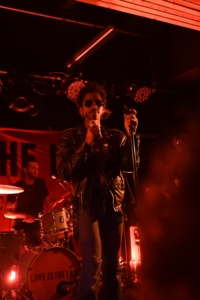
 Orca kicked off the night for his grand homecoming gig. This swoon-worthy duo out of San Antonio delivered an utterly enchanting set. In past gigs at White Oak Music Hall, the openers rarely stuck out. I usually assume the sound mix for introductory acts is muffled, making it hard to parse the tunes. However, this duo was a stellar exception. Their sound hits that lush, dream-pop sweet spot reminiscent of Clairo’s Charm album. Very whimsical love ballads layered over soft, syrupy instrumentals. It was the ultimate, vibe-heavy warm-up for Love Spells.
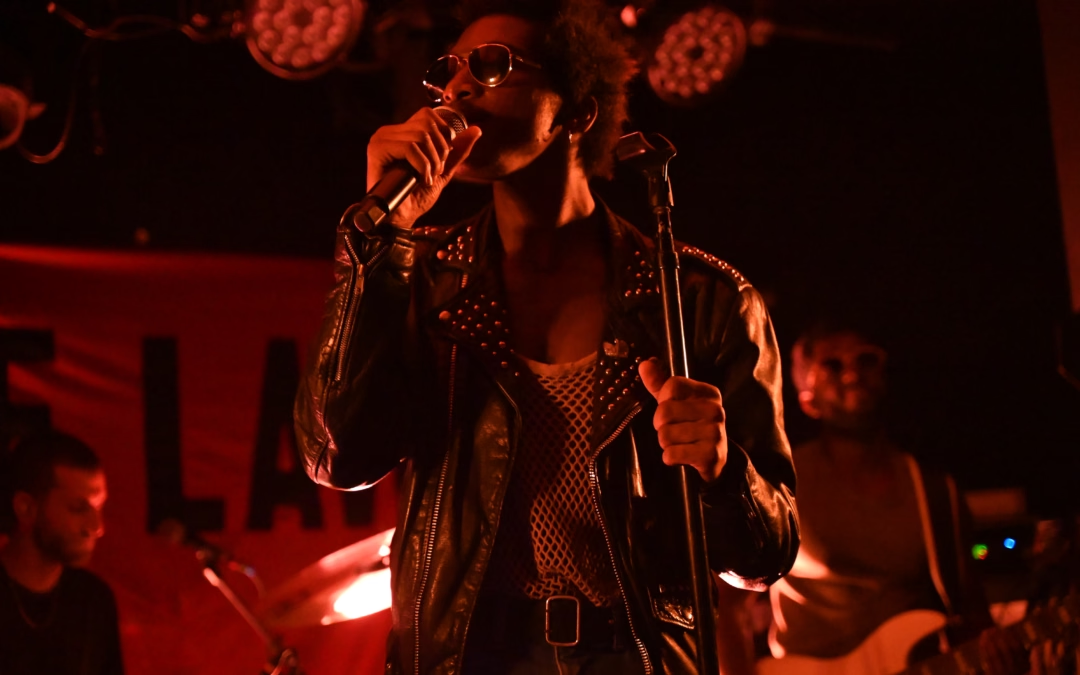
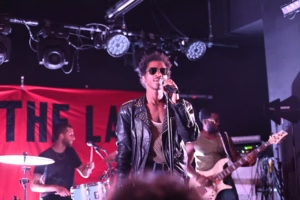
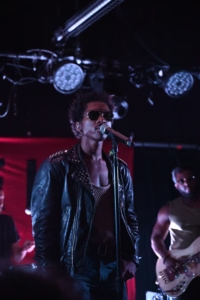
 When the main act rolled around, Love Spells strutted onto the stage draped in full retro-glam 80s flair: black cowboy boots, aviator shades, a worn leather jacket, a fishnet top, and bootcut jeans. He counted the band into “Lovers Only,” standing cool as he casually hit every sky-high note in his mesmerizing, Prince-esque falsetto. Midway through the track, he tossed the mic aside, hyped up each band member, and grooved to their riffs.
Though much of Love Spells’ discography is slow-burn, he kept the room buzzing with electric energy and a strong set list that evenly mixed dreamy slow dances with upbeat bangers.
The energy peaked when Houston City Council Member Alejandra Salinas took the stage to announce a historic milestone for young Houstonians. She officially declared September 16th as “Love Spells Day.”
Standing front-row in the thick of the crowd, writing a concert review for a former classmate felt like a wonderfully surreal full-circle moment. Watching his infectious energy as he danced alongside his bandmates and charmed the audience was his pure, authentic self. It was heartening to see that all the virality hadn't diminished the person I once shared a class with.
Oct 2, 2026 | ktru
Written and Photos by Israel Lerma
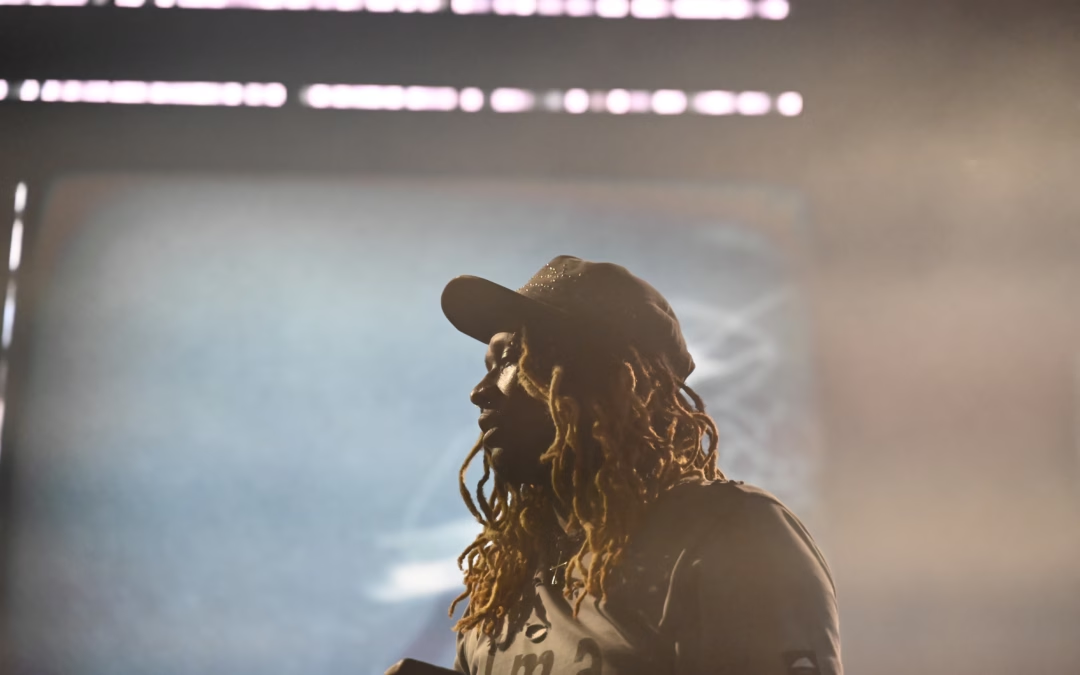
For a peaceful Sunday in Houston, Texas, I got a photo pass notification for some of the modern hip hop goats, YSL, and them. Welp, let me clarify who they are: Young Thug, Nav, Teezus, Diamond, 1300Saint. Thug, as we know, is one of the iconic artists, and now he's here showcasing his YSL crew and the GOAT NAV. And oh boy, this concert was way better than people judged it. Let me explain how this night basically got me physically hit by Teezus himself, the intense eye contact Thug was giving me.
To start, we had the openers, who were okay at first, but I totally respect the sound and what they are going for. One thing I will comment on is that the flow of who was coming was so confusing, as there were way more YSL members and the entourage up there that I was lost on where we were. Also, they were behind schedule by like 45 minutes lol. But 1300Saint was cool, but Diamond ...
 was better for sure. This new generation (hehe) is quite solid, a different sound of early Thug, but they are paving their own similar sounds to be something great that is for sure. The biggest start was for sure Teezus, and holy he is a star. He is one of the few new-age rappers who genuinely impressed me. Why? Well, man, his energy is nuts. I have never seen a live performer like him, frankly. He is new to the game, but his energy and stage prese nce do not feel like it. He is like prime UZI type of energy! His 25-minute setlist was also the best out of the openers, and he delivered in his performance, actually rapping along. Also, the fans went crazy, people in the stands love bro, and he had the same amount of pop when Thug came out. Also, while Teezus was interacting with the fans, he tried to go backstage, and lowkey smacked me lol. This lowkey upset me, but I gotta respect the energy at the end of the day lol.
 Moving on, we then had the goat NAV come out, and yeah, he is quite good. Lots of people complain about him coming, since it's not YSL and his music sucks, but nah. His music is good, and he is an experienced fellow in the game. I will complain, his songs were practically all featuring someone, from Uzi to Travis, he kinda relied on their bangers to carry rather than a solo set. But even his own personal tracks like Myself, ehh, lowkey that was it lol. Yeah, looking back, every song he played had a big modern trap feature and just Nav. He also played one of his iconic features, Beibs in the Trap, an iconic bird's song that was appreciated and loved in the H. Still, Nav knows what the people want, and he lets them bang. I respect that a lot. Not everyone in the audience was loving that, but I sure did. He did not really interact with anyone in the audience, but his constant energy and confidence made it pretty worthwhile. I mean, if you look at the track record of his set, it is insane that he can just perform these songs lol. And welp, he can support that, as can what I experienced.
Now, finally, Thug! was on the verge. So as Thug came out, everyone came out, I mean, it is called the YSL tour. The first 10 minutes of his set were him and the YSL boys playing their new stuff, which I really think is just okay. It was quite a boring 10 minutes, with many repetitive tracks and just them ad-libbing their parts, trying to get stuff lit. It really fell flat, and most people would agree. It felt more of a showcase, which I respect, just not a good one whatsoever. BUT then finally, everyone left, and it was just Young Thug. That's when he made the night special. First performance in Houston after all the Rico stuff, this was monumental for the H. He started playing his bangers, Lifestyle, Hot, Mamacita, Surf... and wow, that is what we call a TRACK RECORD. His performance was lit, he loved the fans, interacted with us, made people's days, it was awesome. He also had this confident swagger, moving around the stage, trying to get everyone involved and hyped up even more. Like he was hitting pretty much everything correctly, and the crowd was finally all in sync, all hitting that peak groove.
Rating Young Thug's show, Letterboxd style
- Setlist - .75 --> Okay, he had most of the best songs in his catalog, frankly. I would get rid of the YSL songs and add more Slime Season 3. But other than that, it was solid!
- Stage Presence - 1.00 --> He did everything an artist should. Talked, Checked, Confident, Awesome background and set. The background was really awesome, it was this atmospheric thing I did not expect.
- Performance - .75 --> For a long setlist, he did a great job in keeping up with the tracks. No crazy flows, but he did his part, you know.
- Audience .75 --> Yeah, for the most part, these were real fans. But nothing in the audience stuck out per se. Some people did pass out tho. Also, some people were more fans of Teezus rather than Thug Surprisingly.
- Overall Experience / Vibe 1 --> Good times, man. I was kicked out of the pit after the first three songs, but my boy Diego, who was personally taking pics for his team, let me slide hahah. Keep that between us, but the whole show, I was vibing when I wasn't supposed to be. Also t, Teezus smacked me, Thug looked at me a good amount, and I got $15 laid out by Teezus 🙂
- Total 4.25/5 Stars
 Now, the first thing to note is that the merch was just disappointing—nothing particularly special, just very basic shirts anyone can make. I still bought one just 'cause of Vince's name, but they are so simple and have so much potential, especially with his new album. Also, my first impression was that this venue was at like 30% capacity... like, that sucked. The venue's balcony was closed, which rarely happens, 'cause ticket sales were under 500 out of a capacity of like 2,000+. That is so tragic. I don't know if it was the date or if people just don't love Vince like that, but that really killed the vibe a little.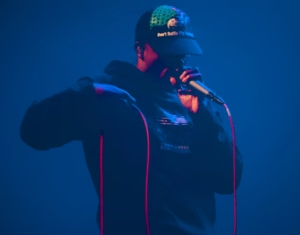
 Setlist - .75 --> Great songs, very weird order, and no love for the other albums like Big Fish Theory or his self-titled album, which is wack.
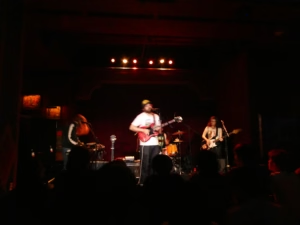 like Ativan, Sadie, and Angels) or played back-to-back in a seamless fashion. This fluidity gave the impression of a continuum, as the ambiance flowed in a single journey rather than starting and stopping again. When songs would appear to be coming to a close, the band would keep the momentum going and, without skipping a beat, transition into the next song.
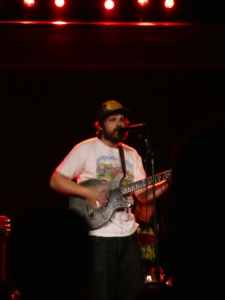 Most notably, Shallow Water relied on complex, unconventional rhythms and unique time signatures to create this listening experience. This method of creating rhythm is most akin to “math rock,” a genre characterized by complex, atypical rhythms and counterpoints—combining two distinct melodies with different rhythm and shape to create harmony. Notable bands in this category include American Football and close peers in the Prog Rock genre, such as Yes and Rush. Adding to the progressive nature of their chord progressions was the lead guitarist's use of ope
 n tunings on his electric guitar. Furthermore, both the lead guitarist and drummer used looping to create layers in melody and rhythm, adding to the ambient nature of their performance. Their opening set was the perfect length, set the right vibe, and created just enough energy to get the audience excited for The Is Lorelei.
 and his band was comfortingly casual. We felt like we were at a dive bar somewhere north of Texas, maybe Colorado. Not much of an introduction was given before Nate jumped into “Where’s Your Love Now”—a single from This Is Lorelei’s critically acclaimed breakout album, Box for Buddy, Box for Star. It became apparent that his live performances of his songs were going to sound a bit different from his recorded versions, skewing more acoustic.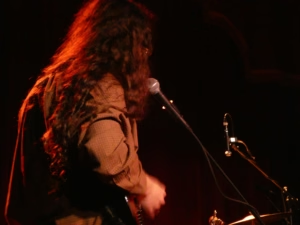
 As we squeezed through the packed front of the crowd, we were astounded by the captivating opening act. It’s a humble one-man band, Rollo Doherty. This artist is a true jack-of-all-trades. He is a London-based singer-songwriter, multi-instrumentalist, producer, filmmaker, illustrator, and animator. He is also known for being the frontman of the band ISLAND.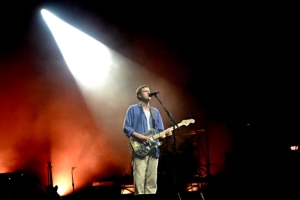
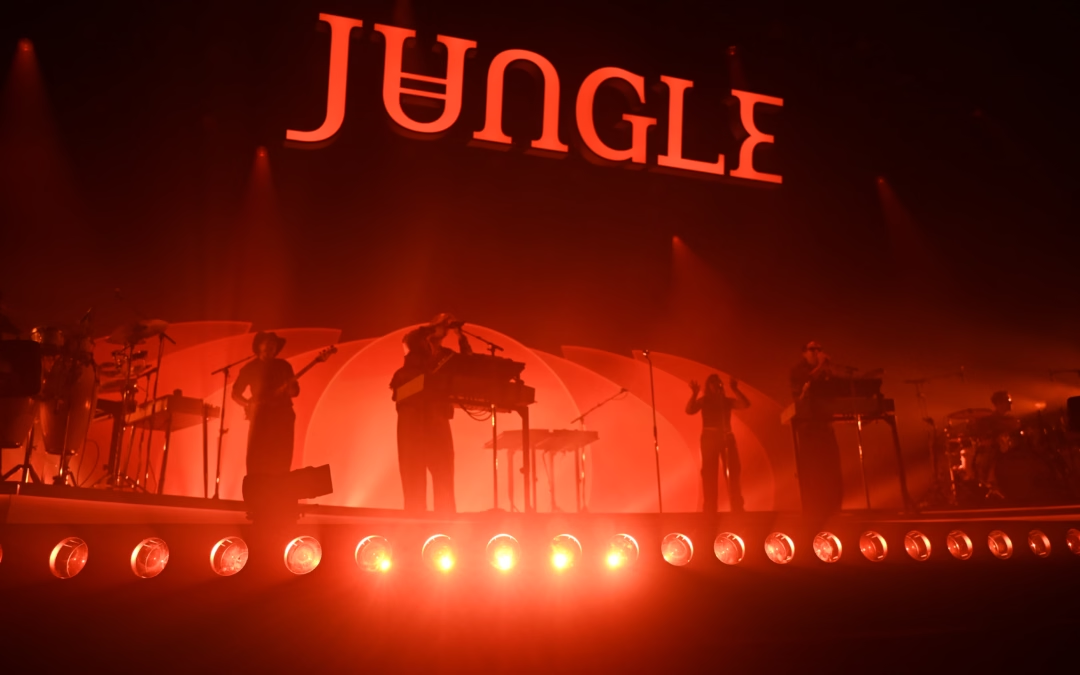
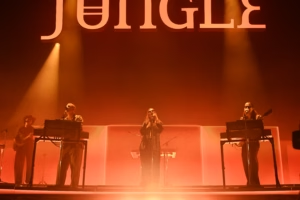 I have a weak spot for some sexy, reverb-soaked, disco jam bands, which is a tough genre to come across in a place like Houston. Attending last month’s Jungle concert at Houston’s 713 Music Hall filled that void.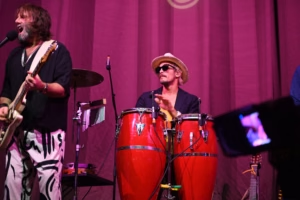
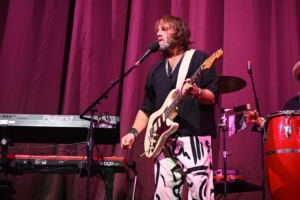 I am typically very critical of opening acts. Sometimes the opening acts don't resonate with the main act. However, Rio Kosta had Jungle's similar confidence and musicianship. The songs were uplifting and hypnotic. I couldn’t help but raise my hands up high and sway along to their set.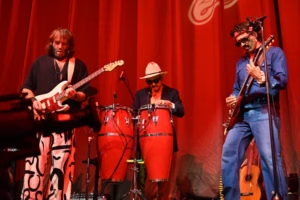
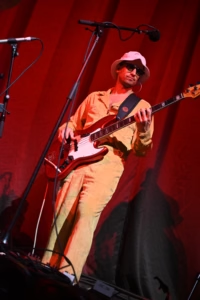 Two of their biggest songs featured artists like Channel Tres and Erick the Architect. I was worried about how they would perform their featured songs without them physically in the venue. However, they provided a cool visual and audio focal point that blended well with the live song, creating a seamless connection between pre-recorded vocals and live instrumentation that kept the energy high throughout the room.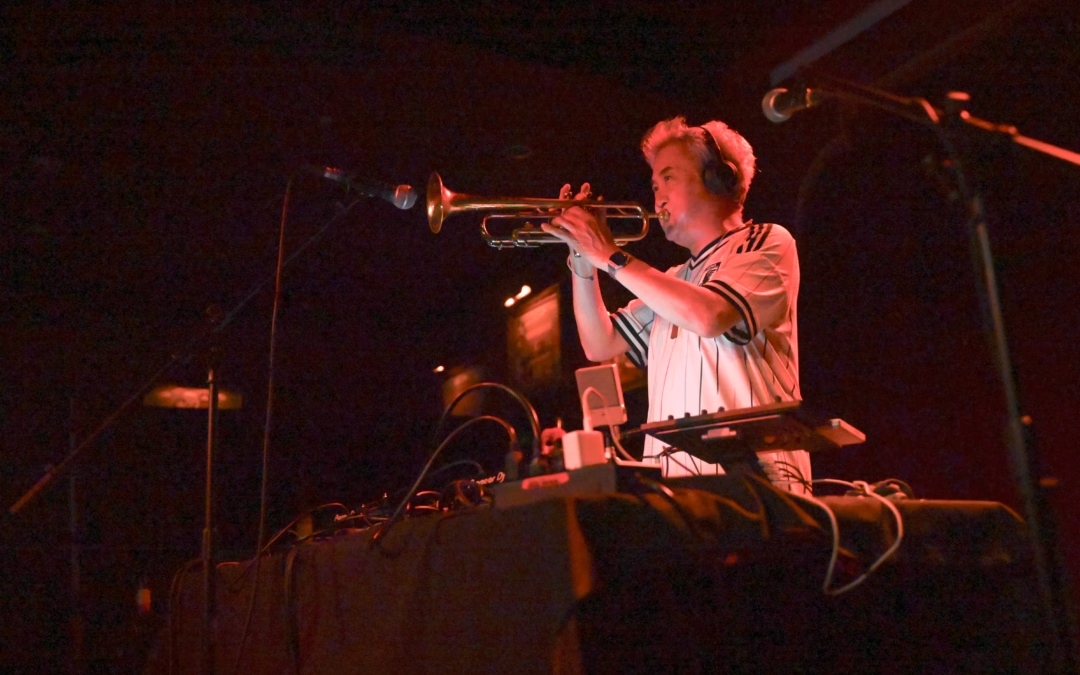
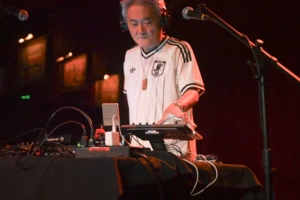 Last month at Houston’s House of Blues, inside the Bronze Peacock venue, legendary Japanese DJ Takuya Nakamura performed a set filled with surreal soundscapes and obscure samples.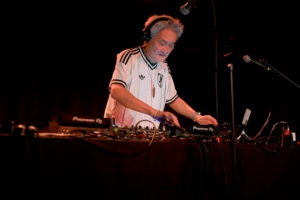
 Back in my high school freshman era, I braved my first year of Chinese class alongside a kid everyone dubbed “Taegen.” Taegen possessed this effortless, cool-cat aura. He was wildly friendly and effortlessly rocked a silver-dyed buzz cut. By comparison, my delightfully square goody-two-shoes self didn't boast nearly as much swagger or street cred.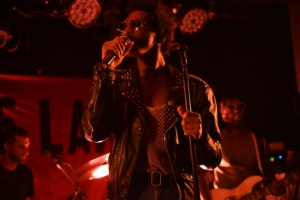
 Orca kicked off the night for his grand homecoming gig. This swoon-worthy duo out of San Antonio delivered an utterly enchanting set. In past gigs at White Oak Music Hall, the openers rarely stuck out. I usually assume the sound mix for introductory acts is muffled, making it hard to parse the tunes. However, this duo was a stellar exception. Their sound hits that lush, dream-pop sweet spot reminiscent of Clairo’s Charm album. Very whimsical love ballads layered over soft, syrupy instrumentals. It was the ultimate, vibe-heavy warm-up for Love Spells.
 When the main act rolled around, Love Spells strutted onto the stage draped in full retro-glam 80s flair: black cowboy boots, aviator shades, a worn leather jacket, a fishnet top, and bootcut jeans. He counted the band into “Lovers Only,” standing cool as he casually hit every sky-high note in his mesmerizing, Prince-esque falsetto. Midway through the track, he tossed the mic aside, hyped up each band member, and grooved to their riffs.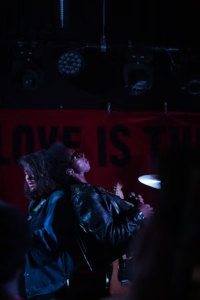
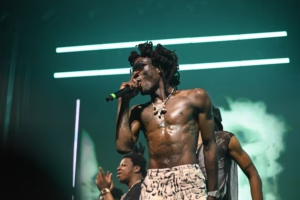
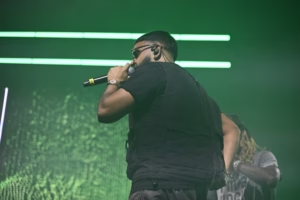 Moving on, we then had the goat NAV come out, and yeah, he is quite good. Lots of people complain about him coming, since it's not YSL and his music sucks, but nah. His music is good, and he is an experienced fellow in the game. I will complain, his songs were practically all featuring someone, from Uzi to Travis, he kinda relied on their bangers to carry rather than a solo set.
 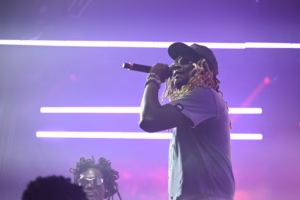 finally, Thug! was on the verge. So as Thug came out, everyone came out, I mean, it is called the YSL tour. The first 10 minutes of his set were him and the YSL boys playing their new stuff, which I really think is just okay. It was quite a boring 10 minutes, with many repetitive tracks and just them ad-libbing their parts, trying to get stuff lit. It really fell flat, and most people would agree. It felt more of a showcase, which I respect, just not a good one whatsoever. BUT then finally, everyone left, and it was just Young Thug. That's when he made the night special. First performance in Houston after all the Rico stuff, this was monumental for the H. He started playing his bangers, Lifestyle, Hot, Mamacita, Surf... and wow, that is what we call a TRACK RECORD. His performance was lit, he loved the fans, interacted with us, made people's days, it was awesome. He also had this confident swagger, moving around the stage, trying to get everyone involved and hyped up even more. Like he was hitting pretty much everything correctly, and the crowd was finally all in sync, all hitting that peak groove.