Oct 24, 2025 | ktru
Written by Steven Burgess
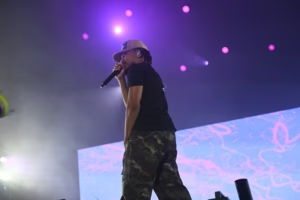
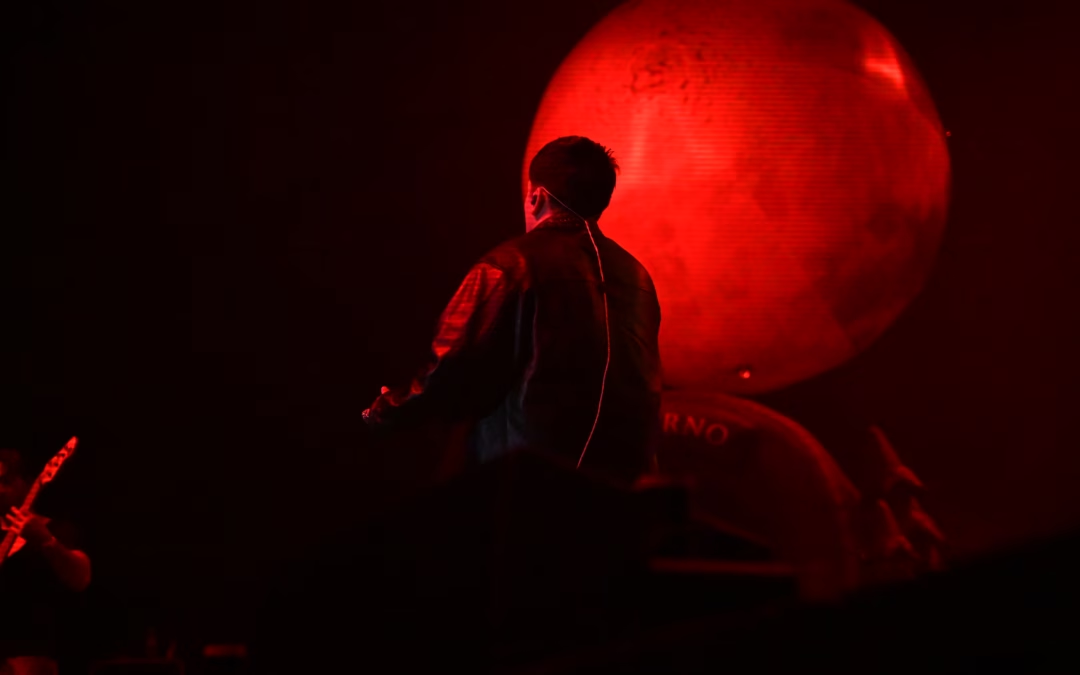
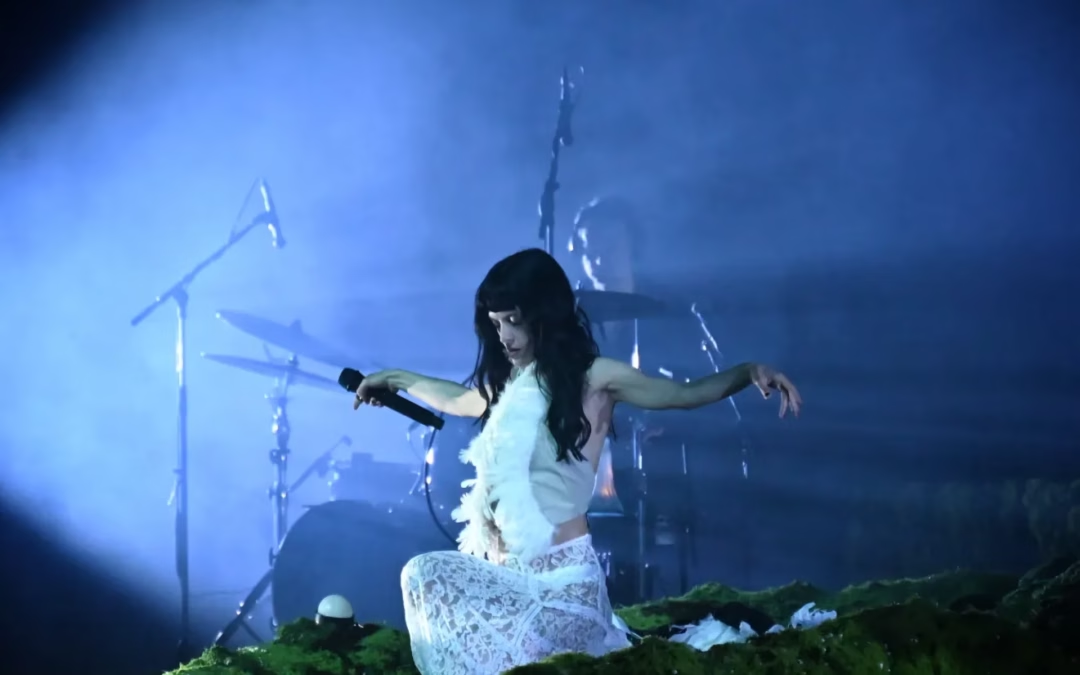
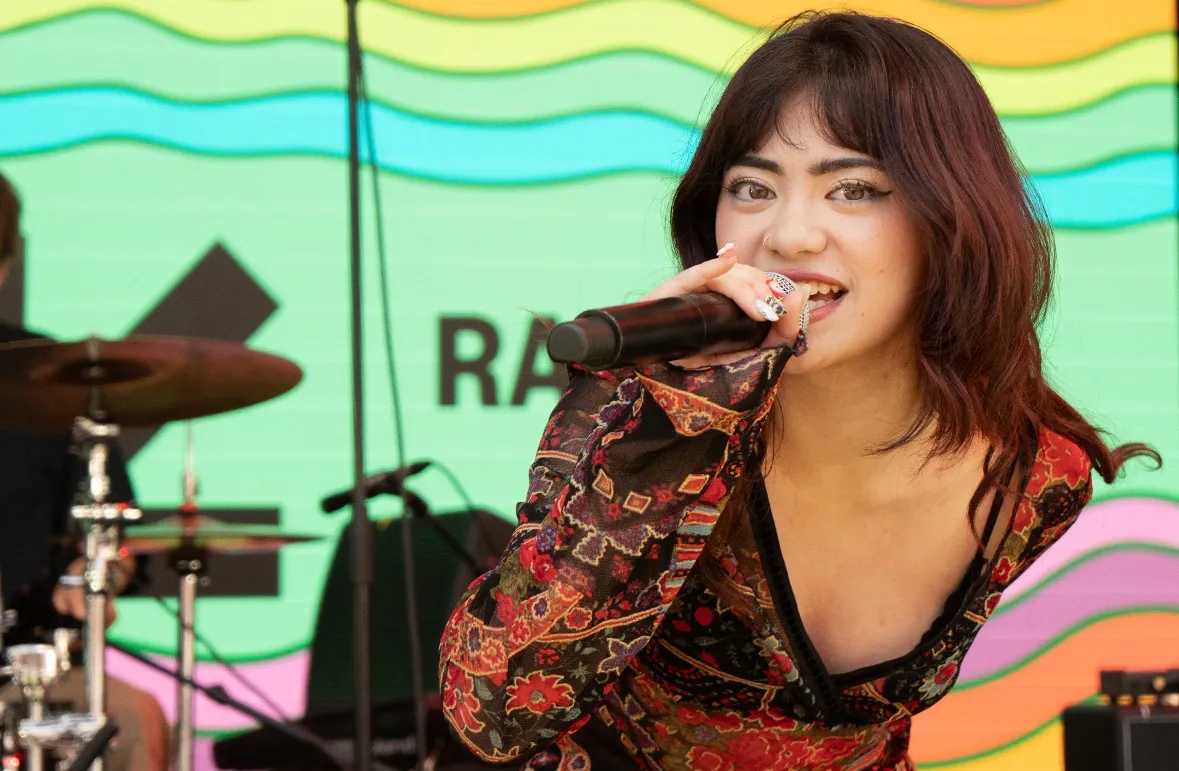
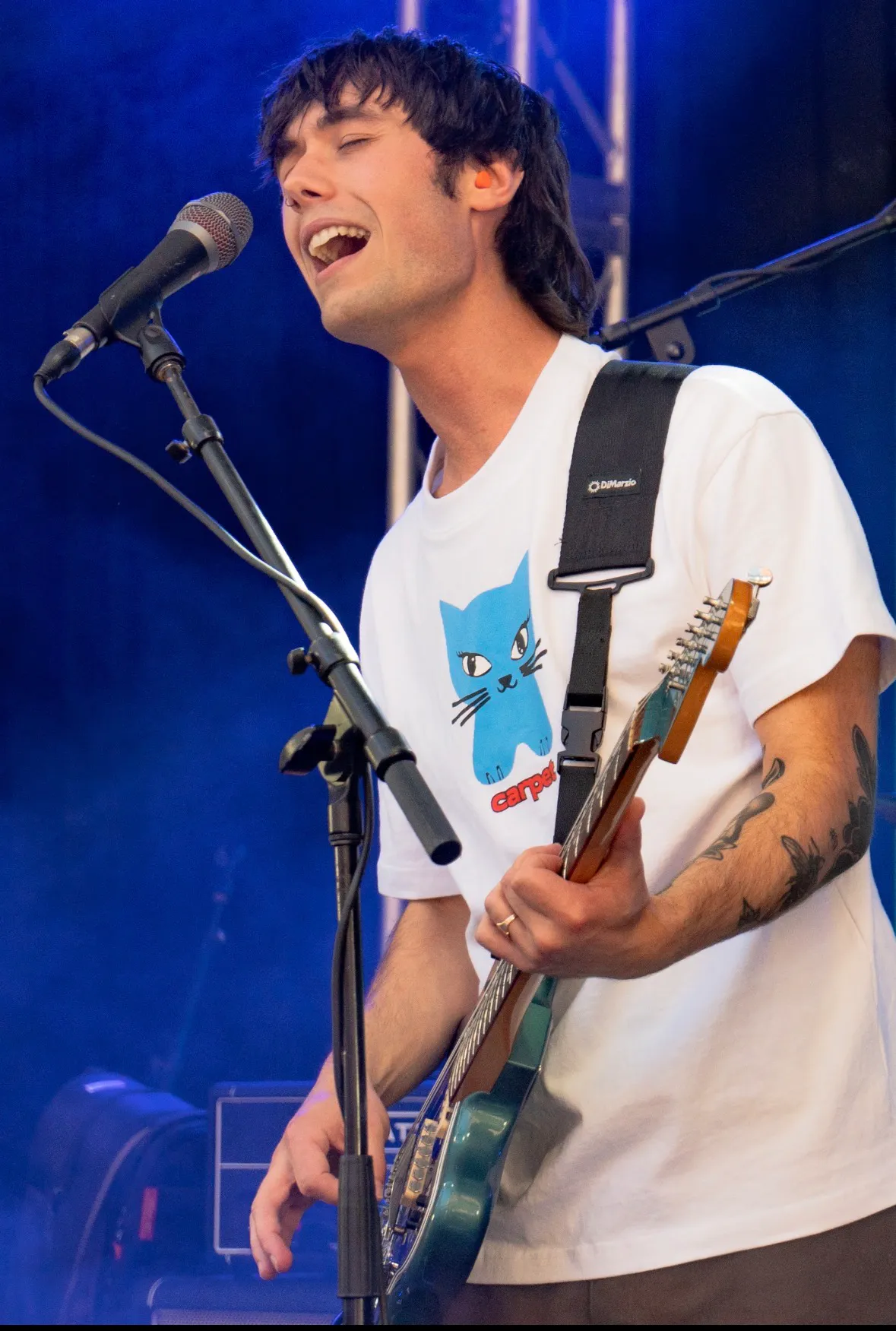
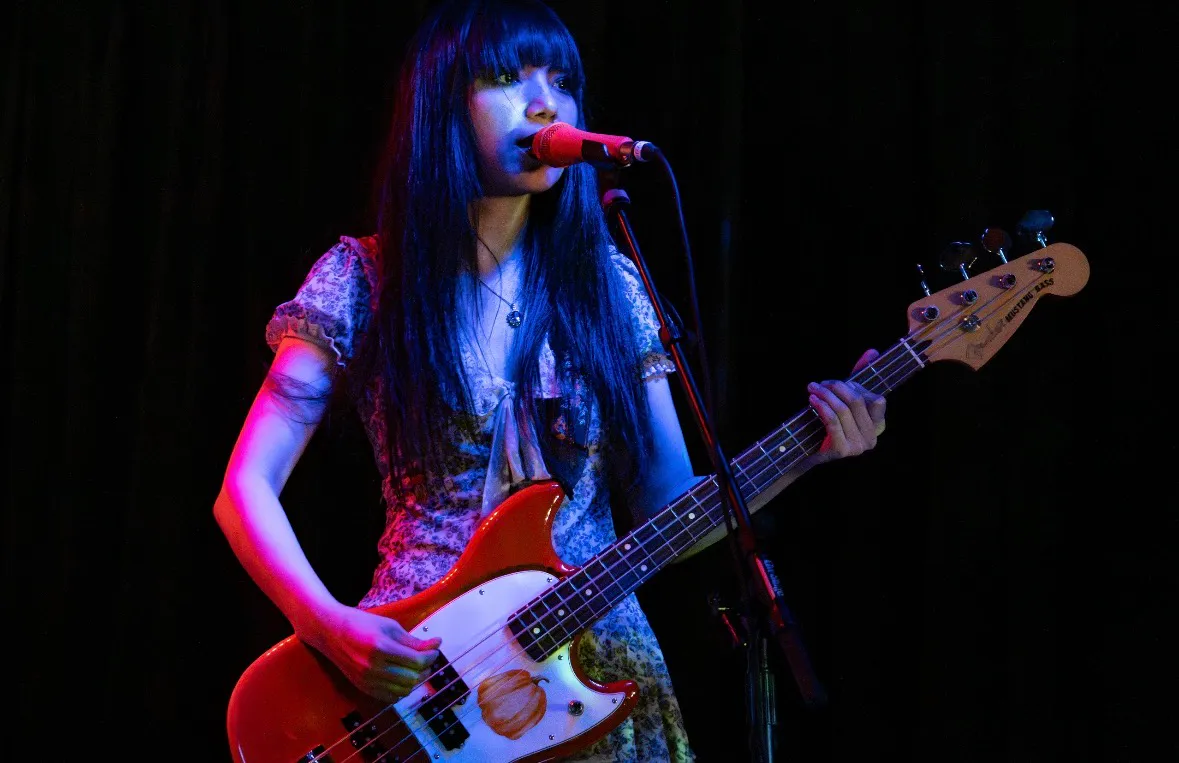
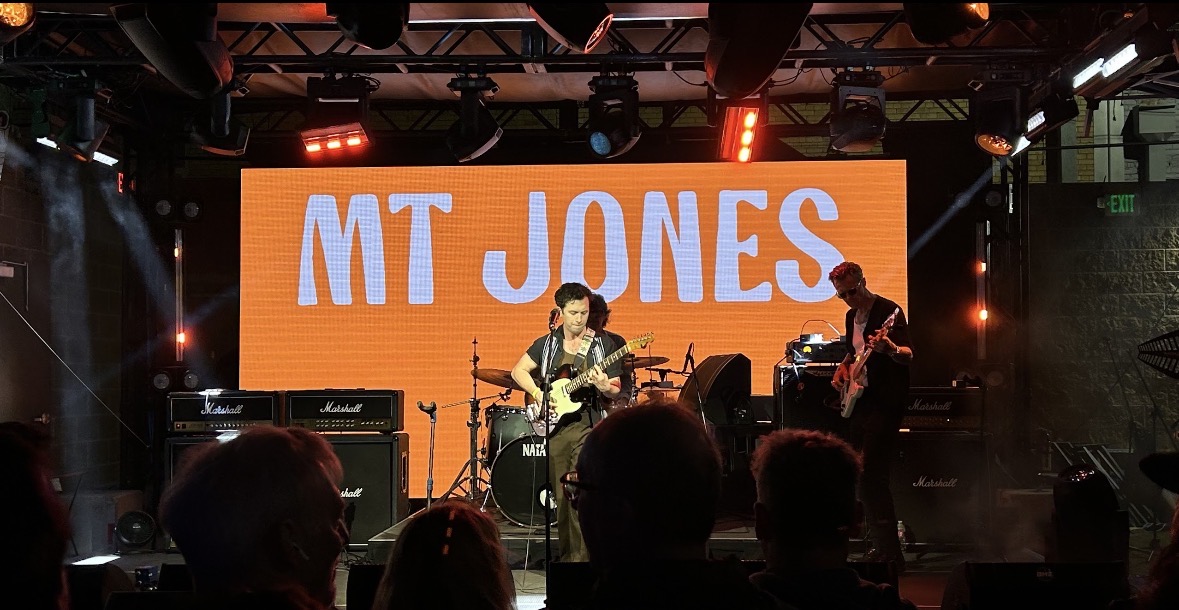
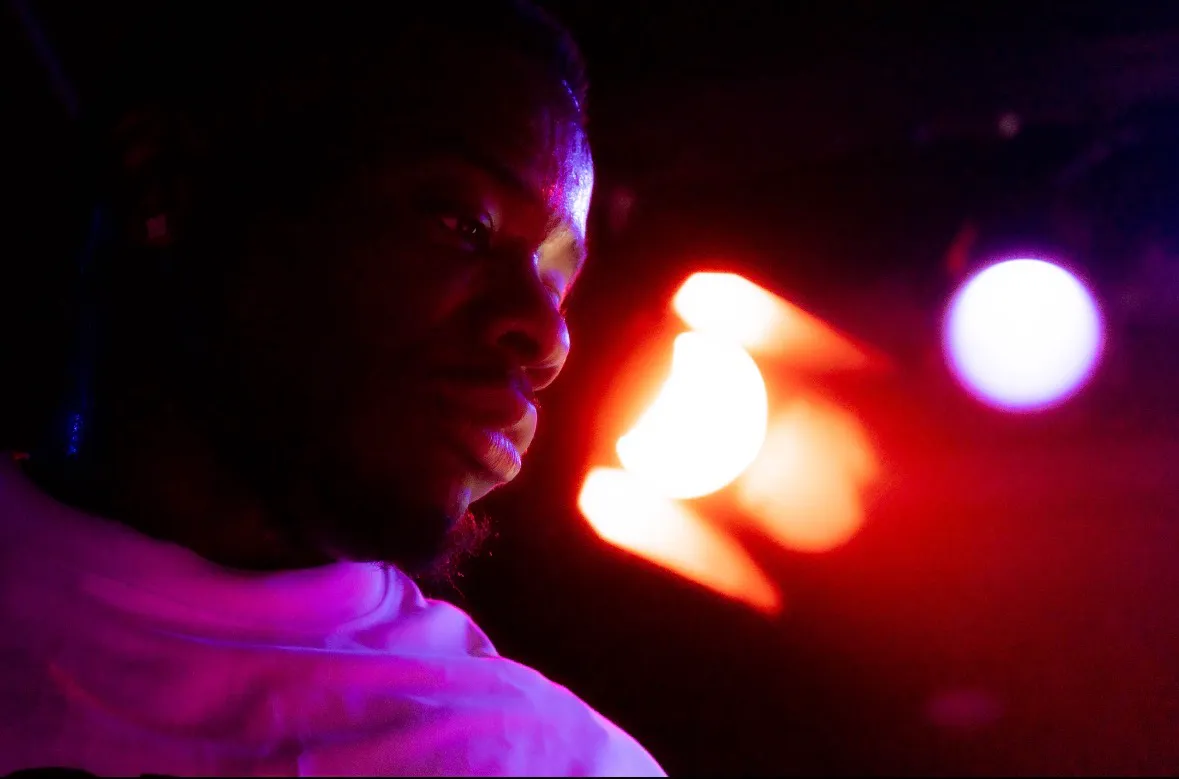
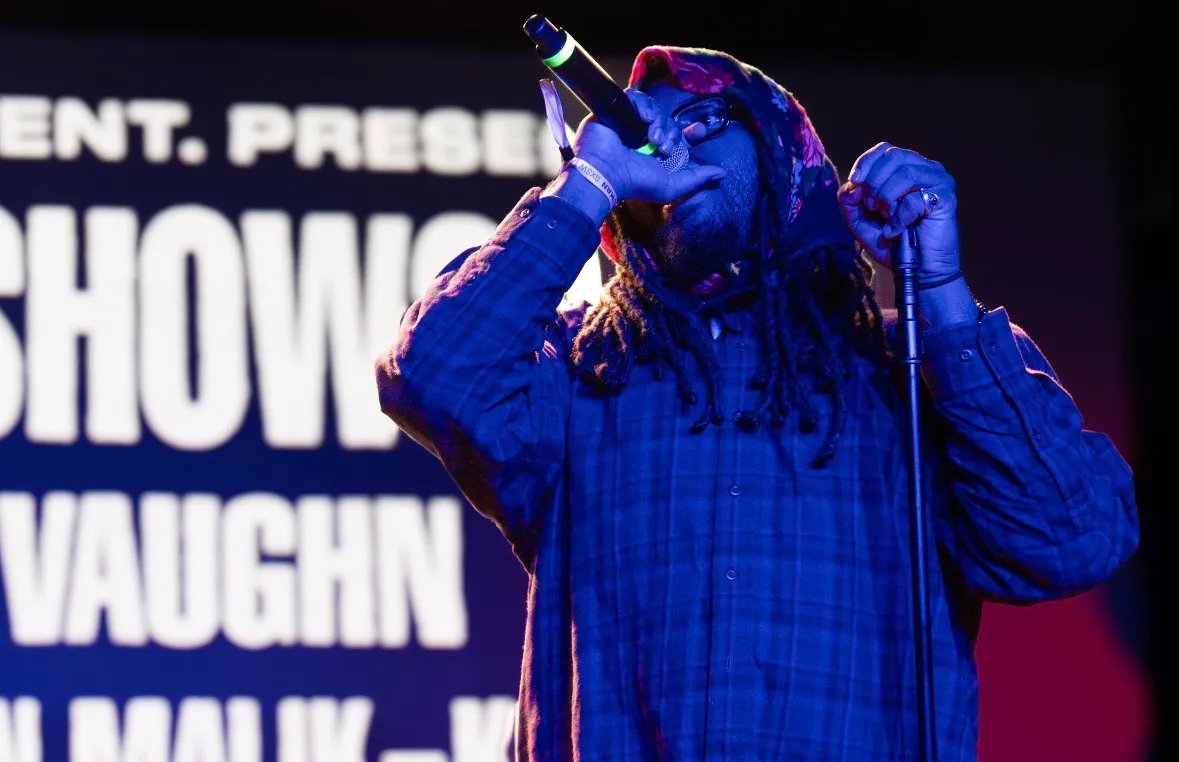
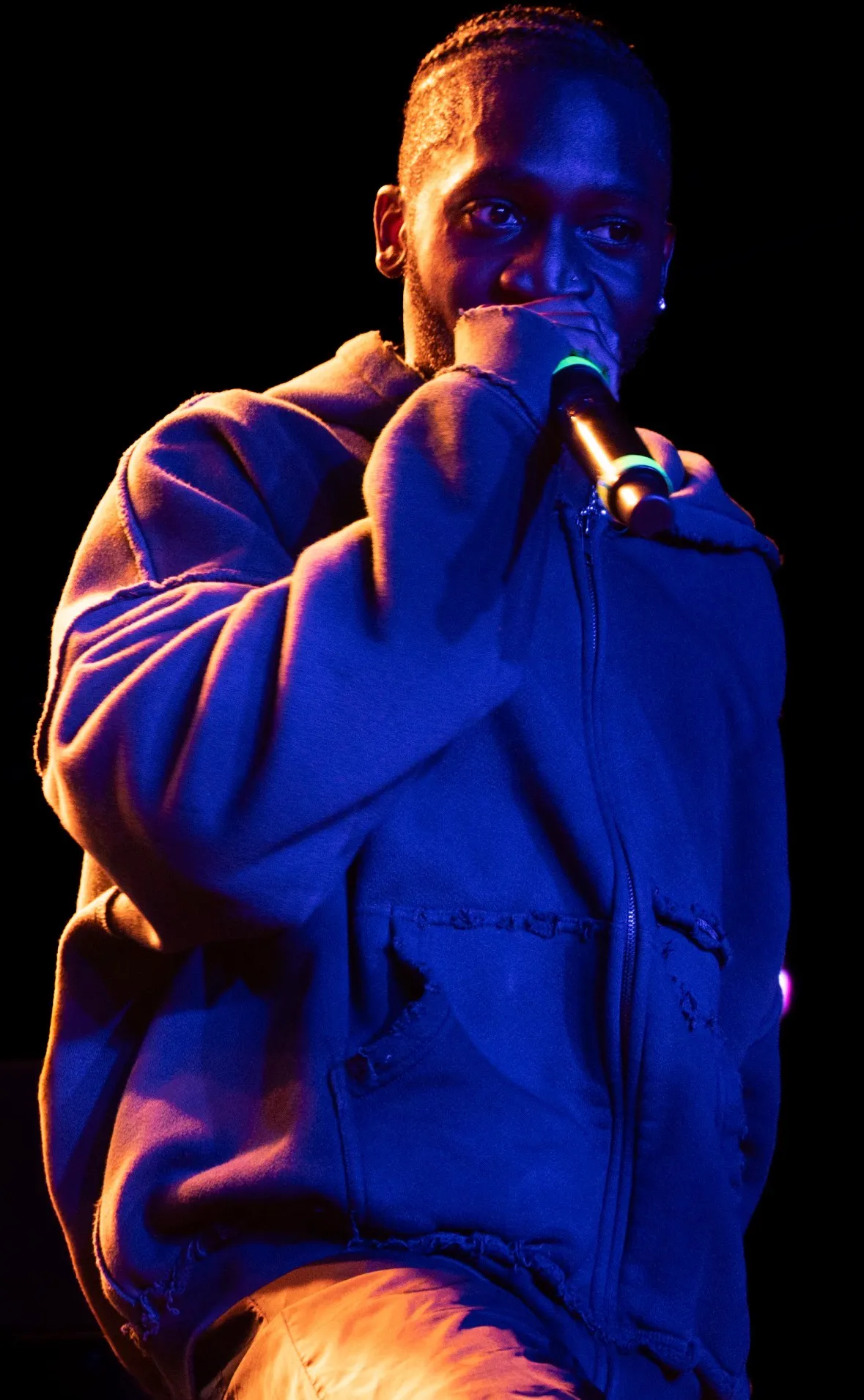
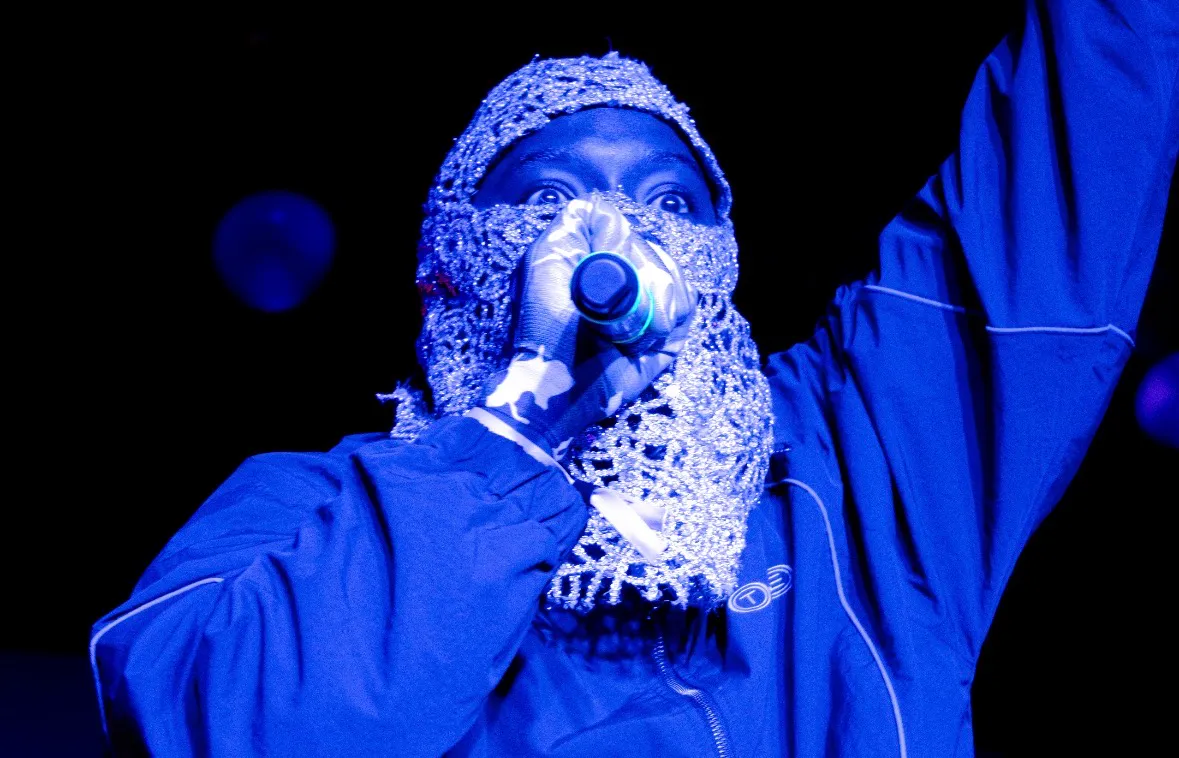
On October 14th, Magdalena Bay sold out Houston’s House of Blues as they embarked on their Imaginal Disk tour. Lead vocalist Mica Tenenbaum and guitarist Matthew Lewin played their most recent record, Imaginal Disk, in its entirety while including throwbacks and an unreleased song in the mix.
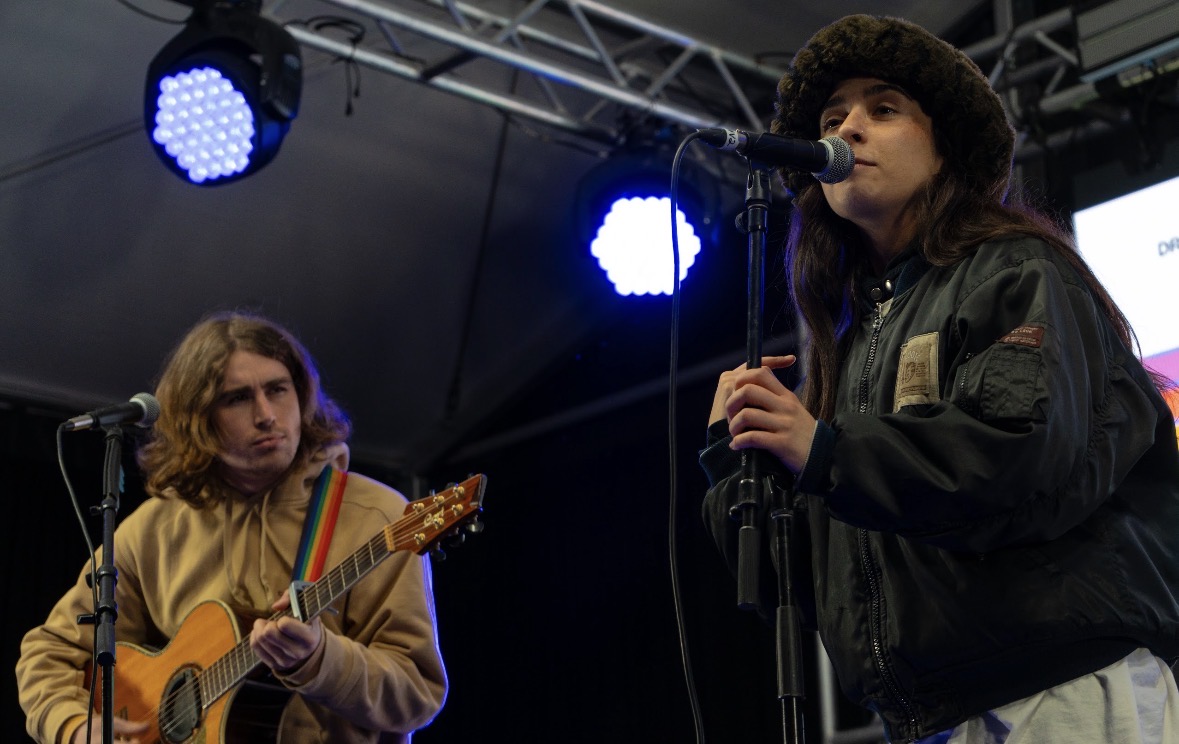
An hour before the show started, Mica and Matt held a preview set consisting of stripped-back vocals and instrumentation. The duo ended up playing 2 songs: “Star Eyes” and “Hysterical Eyes.” Mica’s raw vocals were just as powerful as they are during the show; it was a beautiful and intimate experience to hear these songs with 80 other people. In between these stripped-back songs, Mica and Matt held a Q&A and touched on a variety of topics: their experience performing at Austin City Limits (ACL) this year, the post-production stage of the upcoming Imaginal Disk film, and visiting Benihana in Houston before the show. The pair both talked about their favorite songs to play on tour (Mica: Vampire in the Corner; Matt: The Ballad of Matt and Mica), and Mica had cited Argentine artist Charly García as a major influence. My favorite parts of this interaction were how down-to-earth Mica and Matt came across, reserved yet sweet.
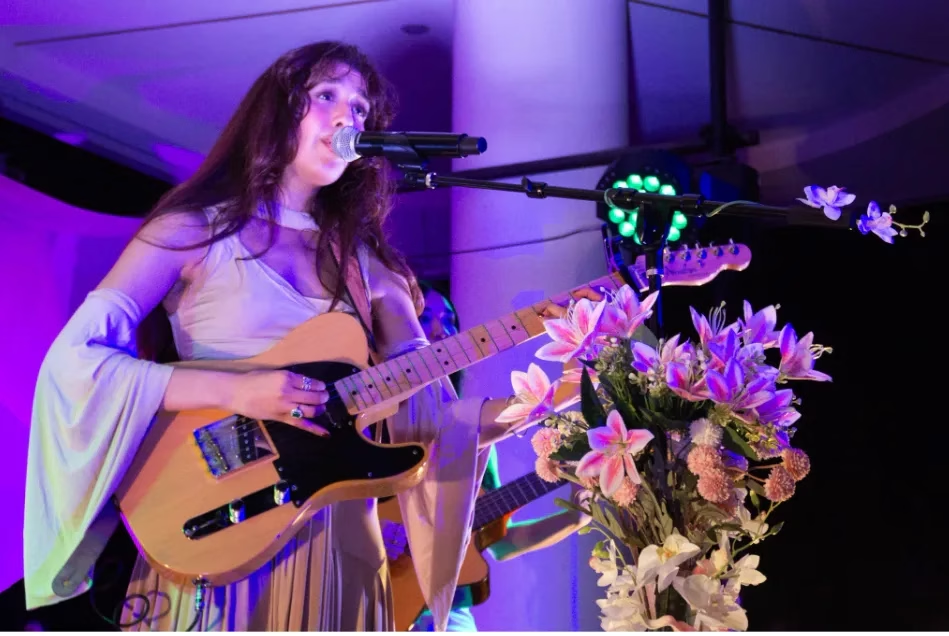
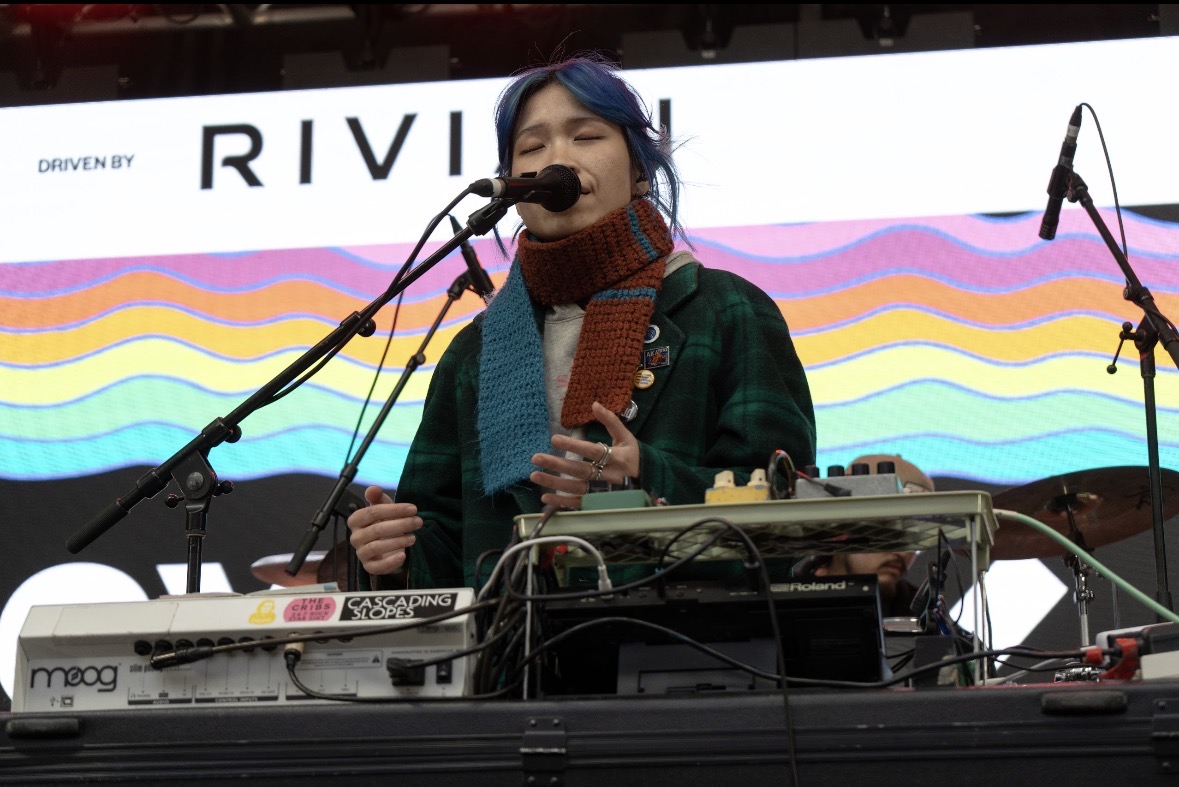
An hour after the pre-show performance, the opener, Oxis, came on stage to perform her set. Oxis is a one-woman band. Her set consisted of a mix of electronic and pop, alternating between synthetic and live instrumentation. On stage, she would record live loops and sing over a drum machine. Oxis was truly a fascinating artist, somehow managing to relate all her songs to fish (“Piranha," “Flounder,” “Goldfish”). The range of her voice, specifically the use of falsetto, was effective, and the crowd was really receptive to her. A moment that stands out from this set was her cover of “Mr. Brightside,” which had everyone singing along and still managed to be related to fish, with Oxis stating to the crowd that the song was an ode to long sardines, the “potato chip of the sea.”
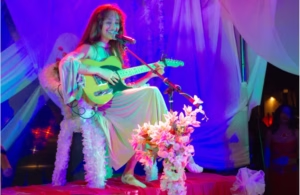
Once Oxis closed out her set, the stage crew pulled back these massive black curtains to reveal the stage Magdalena Bay was about to perform on. The best way to describe this set was a mix of Peewee’s Playhouse and Alice in Wonderland on acid. The stage included a 2-floor set-up, a multi-dimensional living room, a portal to another world, and a wall consisting of a tapestry filled with clouds and a blue sky.
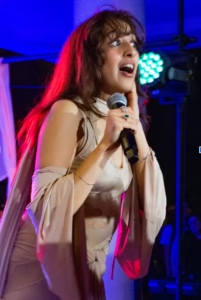
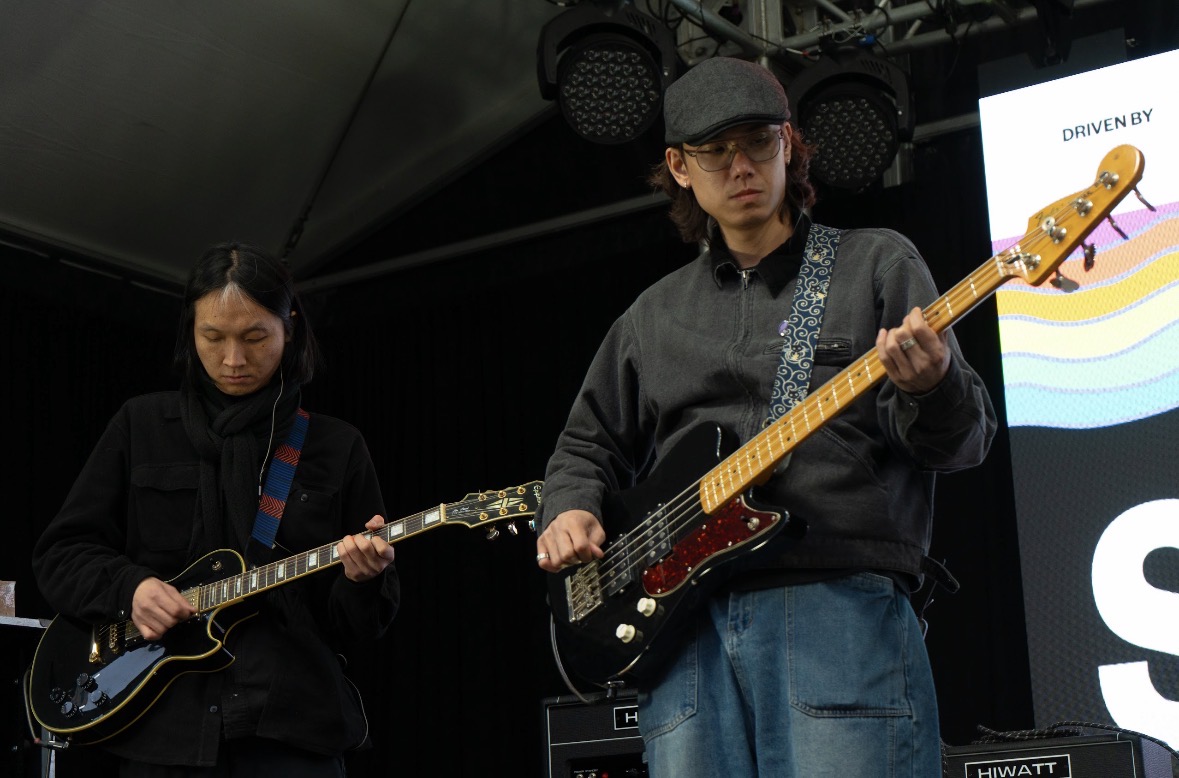
When the lights dimmed and Magdalena Bay had started their set, it felt like the audience had been dropped off on a different planet. Matt came onto stage with an all-red outfit and Mica wearing a blue jumpsuit in the style of an intergalactic ABBA member. As the pair started to play through their set, one didn’t even need the visuals to experience the sonically dense and colorful world of instrumentation Magdalena Bay had to offer. Many of the songs performed were incredibly textured, with songs such as “Tonguetwister” and “Tunnel Vision” having insanely visceral and complex instrumental breaks. Between songs, Matt would seamlessly switch between bass and guitar, with every few songs performing a guitar solo that would entrance everyone in the crowd from “You Lose!” to “Dreamcatcher.”
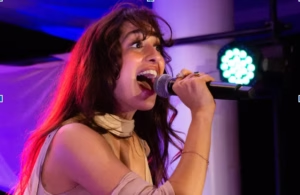
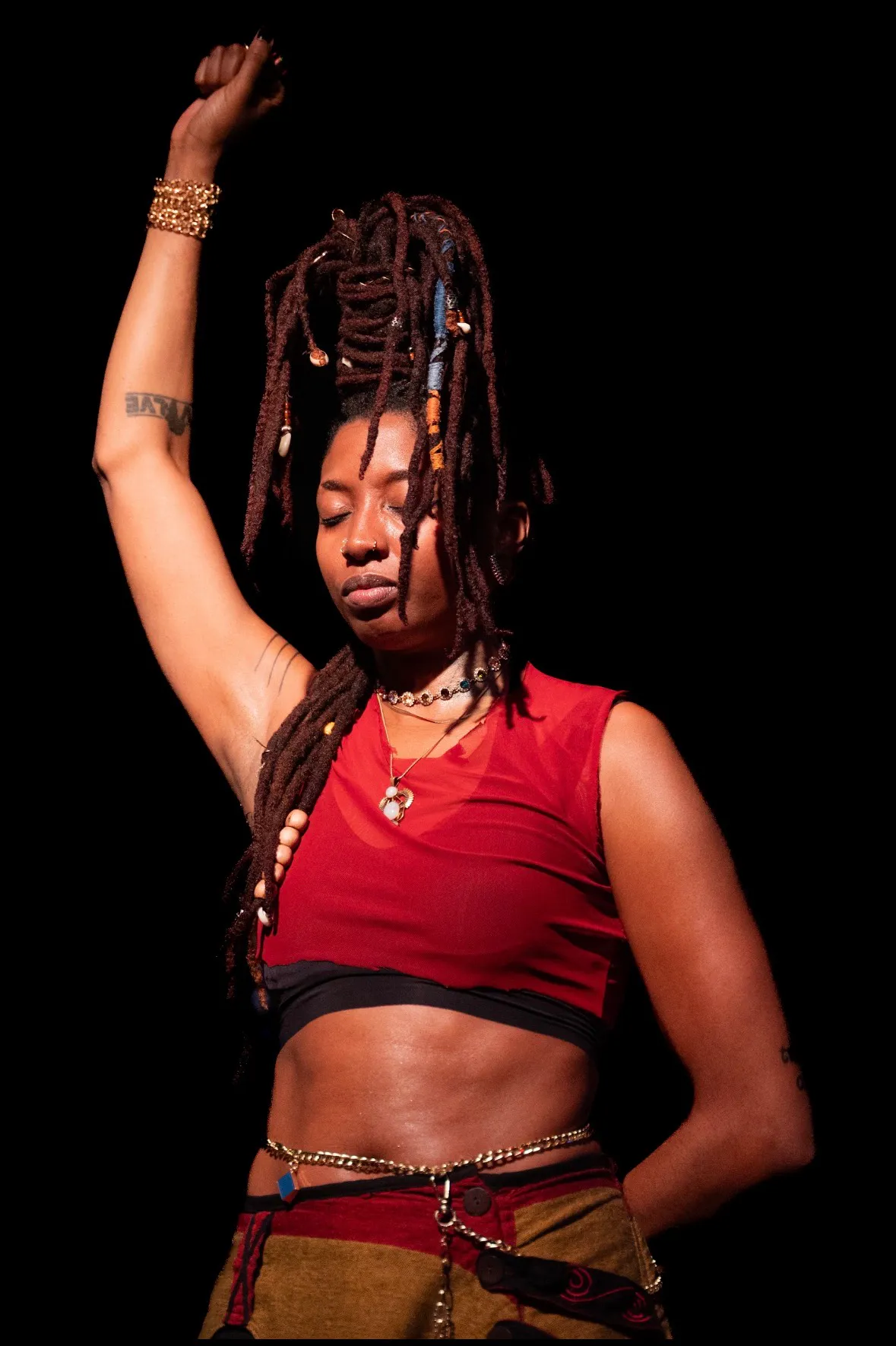
Mica had a phenomenal stage presence throughout the entire show: skipping around the stage, constantly jumping, spinning, and interacting with the audience and set pieces on stage. Not only was her voice on point, but her performance was elevated by the theatrical elements of her showmanship. Mica would play a character on stage and perform these mini monologues, inviting the audience to experience the next song with her. Songs felt more like scenes from a psychedelic Broadway play. Throughout the show, she ended up having multiple costume changes: a red jumpsuit with planets pinned onto her, multiple masks, a translucent cape made from fake flames after the instrumental break of “Cry for Me,” and a blue ballerina outfit with angel wings during “Angel Satellite.”
Some of the strongest musical moments of the show consisted of the sheer power of Mica’s vocals on songs like “Love is Everywhere,” the instrumental passages on “Cry for Me” and “The Beginning,” and when the duo played an unreleased song called “Paint Me a Picture.” I was also taken aback by many of the visuals displayed on the portal, like the huge clock ticking during “Killing Time” and the Claymation portions of “That’s My Floor.”
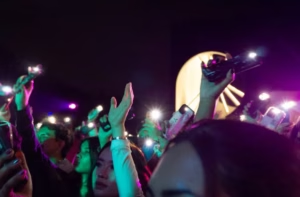
There are very few artists with the ability to create as immersive a show as Magdalena Bay. The theatrical capabilities of the Imaginal Disk tour were the musical equivalent of experiencing a Meow Wolf exhibition – endlessly creative and colorful. The ambitious vision behind this tour exceeded every expectation I had walking through the doors of the House of Blues. The set design, costuming, and visuals alone were incredible, but the showmanship displayed by Matt, Mica, and the backing band propelled the show to a different level. Experiencing the show with fans dressed up, singing along, and bringing top energy made this performance a privilege to experience. I will think about this show weeks after I experienced it and still have a vivid image of the set, the grandeur of the sound, and how they made me feel like I could float.
Aug 9, 2025 | ktru
Written by Angela An and Cheryl Lee
LAUNDRY DAY, a New York city based American pop rock band, performed at Rice University for KTRU’s 33rd annual KTRU Outdoor Show. The high school friends (Sawyer Nunes (vocalist and drums), Jude Ciulla-Lupkin (vocalist), Henry Weingartner (guitarist), Henry Pearl (bassist)) turned four piece band have grown a mass cult following, and have garnered even more fans through their internet presence, who then discover their eclectic and unique sound, angsty lyrics, and even more vibrant personalities. LAUNDRY DAY dives into their musical sound and creative processes, favorite memories, and even gives us a tiny glance into their upcoming new album.
Q: What artists or bands do you individually look up to? Who are you inspired by?
Sawyer Nunes (SN): The first album I got was Jack Johnson, The Curious George Soundtrack. It’s really great, but I loved Jimi Hendrix and the Beatles growing up, and then I kind of got into hip-hop in high school.
Jude Ciulla-Lupkin (JC): When we were soundchecking, someone was holding a baby and they were like, “Do you guys know any Wiggle songs?” And I was like, “Yes.” Wiggles was my upbringing. I used to have action figures that I brought everywhere. At the time, I don’t think I knew I would be in a four piece band myself, but maybe it was meant to be. And then honestly, I recently rewatched High School Musical, which is another big inspiration. It reminded me how ingrained that is in my tastes and the music they reference in that, whether it’s like the musical theater influence, [and] honestly there’s a lot of R&B and hip-hop influence in that soundtrack and the production. As silly as it sounds, that’s in my blood a little bit.
Henry Weingartner (HW): My parents for some reason got invited to Sting’s birthday party one year, and he performed. The entire thing was three hours, and Sting would play two songs with different musicians. The best one to them was he played “Wrapped Around Your Finger” with Rufus Wayne, and from then on, my dad would play Want One a lot. When we got derailed coming here, on our flight from Dallas to Houston, I listened to the same Rufus Wayne song (“Go Or Go Ahead”) over and over again.
Henry Pearl (HP): For me, my dad played Bernardo in West Side Story, so there was that sort of theater element, but he also played a lot of like Police. My mom was super into Joni Mitchell, James Taylor, Carly Simon, etc. In the car, I think the thing everyone agreed on was like the Red Hot Chili Peppers, and Coldplay.
Q: What is your creative process when it comes to songwriting?
JC: We’re actually working on our album right now…We were actually just in LA, which..as loyal to New York as we are, the whole music industry is out there. So we were just there for a couple of weeks. But basically, every day we went to a different studio with different producers and played them some of the demos that we’ve been working on, but then made a lot of stuff from scratch with all of these different people and got to collaborate more than we ever have. But really, everything starts with the four of us just kind of brainstorming what we wanna make and just throwing paint at the wall. We have a lot of unfinished songs that kind of then just leads you to the finished ideas. So right now, the album is coming along and we’re at the phase where we have sort of the full written songs that we really like, and now we’re taking a lot of time working with producers and trying to refine the songs and you know, making track lists and all these different things. This one’s different from all the other ones that we’ve done too, just because we’re being a lot more collaborative than we ever had, which is fun.
SN: I think that’s a good way to describe it. A big thing that we always talk about is that it’s not like traditional band set up, because I feel like most kids our age learned to produce before they learned how to be in a band. Obviously that’s not the case for everyone, but we had so much fun making music on the computer together with each other that actually playing it live and being in a live band was kind of an afterthought. So because we all learned how to produce before we learned how to be in a band together, we’ll all play like different instruments where we’ll all have ideas for different things.
HP: Yeah. I think that really speaks to our origin story a little bit which is so classic, which is just that Jude wrote a song for his girlfriend and they just recorded it, and it’s all just been about the studio, but then also being able to play shows, like I think Sawyer says this a lot, like the celebration of that.
JC: Yeah, so we kind of produce like we’re almost making a rap song, like we’re making a beat in the computer like a hip hop producer might do it. Sometimes it is but not a lot of the time we’re sitting around on a guitar writing out the song, like writing out the song. It kind of makes itself and then we write over it like as if we’re writing verses. We actually just worked with an artist that was really fun to work with, d4vd. We just did a session with him, and it was really cool because he just had so much energy and worked really quick and that’s how we like to work too. So we had already made a couple of beats for him and played them for him, and as soon as the first one started playing he was just humming along and came up with sh*t on the spot and that’s our vibe too.
Q: You have quite a different sound than other artists - you don’t really fit yourself into a mold of expectations when it comes to artistry. What came about deciding that and how do you see this artistic vision growing in the next few years?
JC: We just played the album for some of our friends for the first time, one of which is here with us and he was just telling me, “It’s just really cool to see it go to the next level.” It’s us being a little bit older, us being a little more wiser, and us having new influences. I think that’ll keep happening and that’s what keeps us going. We are very much fed by the new thing we discover, to want to make something new and make something we are inspired by. Everytime we make an album, we kind of have a list of albums that we’re sort of modeling after, and every time it’s different. And then you finish the album and you sort of get the resolution of having been inspired by those things, and so you get to move onto the next thing. We’re so in the weeds of what we’re doing right now that who knows, but in a few months when we’re done with this album, there’s going to be the next thing, and we’re gonna keep making these albums. Hopefully every album has a different story behind it and we don’t get to the point where they all start to sound the same.
SN: As you grow older, you’re going to sound different. When I go back and listen to our old music, our voices and just like, our choices sound so so different, so even if we were trying to do the same thing over the course of eight years, it would end up sounding probably pretty different. I think on top of that, each time we make an album, we’re trying to do something sonically different. So that combined with just growing up and getting a little bit older I think is what makes people kind of feel like this is so genre-bending or all over the place. Like, even if we were trying to make six bedroom pop albums, I feel like just by growing up, you’d sound a little different over time. That combined with also going in with the intention of like - we were really hip-hop influenced by this album, and now we wanna be more rock, or now we want to be blah blah blah - like our voices will sound different no matter what genre we choose, so there’s some of that element that goes into it, too. So not all of it is super intentional that we want to be completely off the wall, but I think we’re going into it maybe differently than most artists, and we’re always inspired by different things. Even if you’re trying to make the same thing, you can never really make the same thing twice, you know? So, I think we try to lean into that.
HP: I would just add that the story changes as well: who you are and what you want to say. And we get conceptual and make sh*t up all the time, but we like each album to represent where we were at.
Q: Sawyer is now on drums - has that changed any dynamics or synergy you have as a band? What was it like having that transition from rhythm guitar/keys to drums?
SN: Obviously, just to address the elephant in the room, losing a band member was really tough, especially since we had been with Etai since high school. So, the emotional part of it felt super weird, like, we had played with other drummers and our friends who were great as well. But it felt weird because it was like losing a part of yourself and like you knew the song so well. Listening to Etai do it over and over again that it felt like anyone who stepped in, like, I would have a million notes for them. So at first, it just made a lot of sense for me to do it because I could and also just because it made it easier, like traveling as a four piece compared to a five piece. Musically, the thing that I always have felt about it was when I was playing guitar and keys, I mean even just doing those two things, I would be running around kind of having all this
energy and having to put down the guitar and go to the keys, and my energy on stage was just like jumping around and doing all this stuff. So like being behind the kit now, I feel like I’m way more grounded and my role, I just stay there and it’s like I’m putting all the energy into the floor rather than it all being super up in the air.
HW: Yeah. I mean the elephant in the room with the four of us after, you know, when we were faced with like with making a decision to who would play drums is like and it was a good elephant. It was that he's fucking great at it. And he's annoyingly good at it. And he's annoyingly good at like a lot of things. Whether or not he was playing keys or guitar, or drums, it's like, at least the energy between the four of us was there. And it was the energy that we had before Etai left. And then when he started playing, it was sort of like a no brainer, because he was fucking amazing.
JC: Yeah, it was shockingly easy and sort of sad, like he knew all the songs already. So, it was just easy to plug in, and every time we rehearsed with someone else, like, obviously they knew enough to play with us. But like we've been through so much together, and it was really strange to think of just popping someone into that.
And so the fact that Sawyer was able to fill that role was like the biggest blessing ever.
SN: Like, there are a lot of times that I'll be singing back up during the show and like, I have to really focus on like, okay, I have to drum. I have to still be like super in front and in the pocket playing wise, but then like I have to be off the mic and not singing really loud. Like, it's easy when you're going really hard to wanna yell.
Q: You guys have been at this for a while. Do you have any favorite moments of your career so far?
JC: Definitely!
ALL: *general murmurs of thinking about their favorite memories*
JC: We reminisce probably a little too much.
HP: We have so many great memories.
HW: We have so many good stories among us.
SN: I think some of the favorites, not to call out any in particular, but I look back at all the moments where you think that it’s all crumbling, that you’re like “Oh, my God, how are we gonna move on from this?” And you do, so those are the moments where I think obviously we’ve had really cool touring experiences and got to play for some crazy crowds, but it’s always the moments that no one knows what the behind the scenes things were, like our car will break down, or [JC: run out of gas] Yeah, stuff like that where you have to walk a mile in the middle of Germany, being at a really scary gas station in the middle of the night.
JC: We talk about it all the time, like just writing a book someday, but really having a T.V. show some day where we can tell all these stories and recreate them. Honestly, to pander a little bit to us being in Texas right now, we have a lot of great Texas memories. Probably more than other places we’ve played in, maybe New York and L.A. I remember the first tour we ever went on, which is a great memory in itself, was our junior year of high school. We did a weekend where we played in Dallas and Austin, and the first time we ever played in Austin, we played at Stubs, and this family was there; this mom and her two daughters, and their friends. And we just bonded with them after the show, and they were so passionate, and they were as young as us. We just felt so much love.
HP: When we were on tour with the 1975, we had the best time with Matty and George. When we got back to the hotel, we were so excited that we had a water fight in the hotel. We were messing with the key cards, and this door was locked and then this one, and then you take a bucket and just pour it.
HW: I actually closed the connecting door to their room, literally the three of them didn’t have a key, and when I was in their room, I flipped their bed over. So we had to go downstairs and get the guy to take the door off the hinges. And then he went into the room, and then the bed was flipped over.
SN: I feel like whenever we do one of those things, like one of those crazy nights, it’s like someone is not having it. And that I remember, was me. Like I really wanted to go to bed. I remember when we got locked out, I remember how much of an a**h*le I was. [HP: The kind of duality of it is that, then like we clean it up.] But that’s why it’s funny. It’s like you’ll be on tour and you feel like you’re the coolest guy ever and you’re wearing an insane fit, and then you walk into a gas station in Missouri and you were like, “What are you doing?” There’s always this balance of feeling like we’re on top of the world, but also understanding the surroundings that we’re in [HW: incredibly humbled] Yeah, like you’re incredibly humbled just by existing sometimes in these different places, but that was a good story.
HW: I have a video of Henry Pearl, this is that same night, of Henry Pearl eating a bowl of cereal at the 1975 concert. Barefoot, they're playing, by the sound booth, and he’s eating a bowl of cereal. I was just so happy for him.
Q: You collabbed with a member of Brockhampton - Romil Hemnani - before for your album Homesick, and even got to talk to Matty Healy. Can you talk a little about this collaboration? Do you have anyone you want to collaborate with in the future or do you have anyone you are planning on collabing with?
JC: Yeah, I mean we've crossed paths a lot of random people, which is kind of one of our great joys of being in this group. Everyone's different and we learn a lot every time. Romil and some of the other Brockhampton guys were some of the first people we ever met in the industry, that were artists in the industry that were we could look up to. We learned a lot from them and and then, you know, years later we're like making a video with Ed Sheeran and it's like holy sh*t, like, this guy's so different and has had such a different career from them. And we were with Matty….everyone's had a different path, and everyone sees the world a different way. We've worked with this guy, Alexander23 and he has such a different perspective too. When he was our age, he was in a band, and he was on the road like us, playing colleges and doing this whole thing. So we pick up little tidbits from everybody.
SN: When we went on tour with the 1975, or the whole year before, that would have been our dream tour, you know, just to meet them or hang out with them. And then I feel like you also really want to collab or do something that feels either, you know, monetarily valuable or like it’ll push your career in a in a different way. But a lot of times, what has been even more valuable to us is just like learning how to, once you're in that room, just sitting and absorbing. I feel like it's easy to wanna, “we should make a song together” or oh, “we gotta do this”. I think we've learned a little bit that, if something is meant to be, it'll be, and you have to just kind of nurture the relationship and not force anything. Like if we got to meet, you know, Ed Sheeran, you wanna kind of be careful about how much you're asking of that person and also it could be hard because we wanna geek out like so crazy and want everybody to come and work on our stuff. But it's almost more, I don't know, it's almost more like universally telling when, something will happen and it won't go exactly what we planned or we won't get to make a song with Matty Healy, but he'll listen to one of our songs and be like, “you guys are great! Keep going!”
Q: Younger Than I Was Before had a very school boy image attached to it, especially with the matching uniforms. Is there something y’all are wanting to do for your next one?
JC: Definitely. We’re not going to give it away, so it kind of goes back to what we were saying before, like we want every album to have an identity, we look up to artists who do that so well. Every album’s an era, and we look up to that a lot, especially when we go then to play shows, like that was so cool to be able to wear the outfits. That’s where it all came from, we just wanted to wear matching outfits. For the album, we ended up not even doing our own tour, we just opened for someone, but even then because we had the costume and aesthetic around it, it felt like our thing - when we were on stage of course not during the whole night. So whatever and whenever that next thing comes, it will be just different and exciting, and people will come to the show and know how to dress and know what to expect from the vibe of the music and everything, and the opener, hopefully, aids all of that as well. We really want to curate things like that.
SN: The one thing I will say, which I think is not giving anything away, something that we think about is like, for the last album, the theme and the vibe was super, super specific, as opposed to like - when we were telling fans to come like wear ties and schoolboy uniforms - for some of our previous albums, we feel like there’s been a universal theme, but it all depends on like, sometimes you want to be really specific and for [Younger Than I Was Before] it was a concept album, and sometimes, like in We Switched Bodies, it was more of a bigger theme. So I can’t promise we’re going to wear matching outfits again, but sometimes it can just be like, we’ll watch great live sets. You'll be like “Oh that era” or like whatever that was, or like the feeling of that album, like sometimes that’s enough to hold it together. It also makes it more fun for us because it’s not like every time we play, we do the same thing, just different, or we wear matching outfits. Sometimes we do, sometimes we don’t, so it makes it more fun for us to switch it up in terms of how detail oriented we go.
Q: Is there a tentative release timeline?
ALL: Can we say it? We already kind of said it.
JC: It’s going to be a summer album. It’s going to be a High School Musical 2 kind of album.
A&C: brat summer, Laundry Day summer.
HP: We’ll never forget brat summer.
Q: Do the Henrys have nicknames to differentiate from each other? Do you call one Penry and the other Wenry?
SN: Originally it was HP and HW, but that wawa like the root that grew into all these names. It’s like “Dub” for W and then “Dubber” and then we call him like “Piss”... like “H Piss”. Henry's middle name is Samuel, but then we started calling him Samuel.
HW: His name is not Samuel.
HP: My middle name is Samuel (Sam-WELL). Depends on how you want to pronounce it. Did I make that decision myself? Yes.
SN: And then we started calling him Sam-WELL. And Sami.
HP: And also they have nicknames too, like Sawyer the other day responded to Nu-Nu.
After this interview, LAUNDRY DAY absolutely rocked the KTRU stage - performing their hit songs like “Jane,” “FRIENDS,” “Other Side of the World,” and closing with a cover of “Party in the USA.” The crowd danced, sang along, and celebrated the end of an outstanding KTRU Outdoor Show! Thank you to LAUNDRY DAY, Basma Bedawi and the rest of Outdoor Show Committee, and KTRU!
Jun 29, 2025 | ktru
By Steven Burgess
Underground Hip-Hop artist John Michel recently came out with Egotrip, marking his first studio collaboration with producer Anthony James. Egotrip is a follow-up to Michel’s previous collaboration with producer Bedhead Bobby on his breakout mix-tape, Sinful Temptations (2023). Since then, through the influence of online platforms like Rate Your Music and Album of the Year, the duo’s popularity has exploded within online music circles. I had the pleasure of talking to Michel about his creative process and the two-year journey he and Anthony went through to make Egotrip.
Steven B: What was on rotation when you were a kid listening to music, and how did that influence your musical upbringing?
John Michel: The first song I probably ever remember hearing was “All Falls Down” by Kanye [West]. My mom was a huge Kanye fan when I was growing up… obviously being from Chicago, that was a huge influence… Around middle school, I discovered Chance the Rapper, and those kind of themes… that he tackles in his music greatly influenced the direction and stuff that I pursue when I make music now. I mean, there's a whole bunch of stuff I listen to, people say [my] voice kind of sounds like Rick Ross… When I went to college in Philly... everybody learned the words to “Dreams and Nightmares” [by Meek Mill]... I got to learn [that] song too… I mean, I love Hip Hop.
I played the saxophone since I was ten years old, as well… Jazz had a huge influence on the way that I make music. So when I'm making the beats, we have context in jazz that… directs the themes and stuff that we go for.
Steven B: You've gone on the record saying, “it's not an album closer unless it sounds like an Earl Sweatshirt song.” How do you feel wearing your influences on your sleeve has helped you find your sound?
John Michel: There's no question about it, right? I was influenced by other artists, and I remember when I was making my first mixtape, Sinful Temptations, I [said], “the last song’s gotta sound like an Earl song, and this is what we're going to do.” Everybody can know it: I like Earl Sweatshirt’s music.
For “Sunday Morning Genesis,” I [told Anthony], “we need a beat that kind of sounds like some of them Earl songs… I want something that feels warm and fuzzy, at the end of the project to seal the deal.”
I feel like it kind of be disingenuous if I don't wear my influences on my sleeve. I want people to realize this is something that anybody can do. You know, I listen to a bunch of people, I pick what I like from them and then craft my own style.
Steven B: Throughout the record, there's a lot of references to Christianity and the Bible. How do you feel spirituality influences the writing and the sound of Egotrip?
John Michel: To some extent, [I am] constantly at odds with myself. Right? Because I mean, obviously one of the biggest Christian values is being humble… and I'm unfortunately a man with a big ego. So those things… don't get along with each other all the time.
Going to church when I was little [compared to] going to church now as an adult, reading the Bible, praying. God influences the way that I live my life... but I mean, I'm still a person, right? Those two things that… are at odds with each other in this… fight that I'm having with myself is laid out on the album.
Steven B: How do you go about your writing process: Do you freestyle, write down your rhymes, or do you wait until you get the beat?
John Michel: It's a little bit of both… Anthony
and I, normally… we'll talk about a song [and] the idea of what we want to make… [such as the case for] “PREACHER!” I tried to make “PREACHER!” 11 times… [after hearing the vocals in a] dream… I think [when we recorded, there were] 11 tracks of me yelling and then 8 tracks of me singing it underneath… There was this one sample that I heard my freshman year of college, and I was like… “We can do something with that!” Anthony chopped it and made it real hard, and then I went in and threw some drums on it.
Well now, I have a beat that's really hard and I have these giant “preacher” vocals. What do I rap about? So… once I catch a groove with what I'm writing, I'll… play the beat over and over again and just record a bunch of nothing and see what sticks, pull some bars out of that, and then be like, “what am I trying to say here?” Then… all the punch lines and stuff that I wrote when I was freestyling… evolve into what ends up being a whole song.
On other tracks like “world’s end”, I freestyled that song, listened to what I was saying and then just cleaned it up… and then recorded it… that song is three minutes [long with] no chorus… [it’s] just what I wanted to say.
Steven B: You talked about how some of these songs you've recorded 10 or 11 times, did any of the songs on the final [album] sound completely different than when they were in demo form?
John Michel: The whole second half [of “PREACHER!”], we got Colin's verse, and I recorded the second verse of that song a month and a half before it dropped. Originally, we had this whole other section with organs and strings and guitar. [We thought], we're doing too much, let's just cut it back and keep it hard and we wanted to make that song pretty, so that ended up changing [on] Egotrip.
If you go through my TikTok long enough ago, there's a video of me rapping on the original “Egotrip” beat. Way different. The verse is different. My delivery is different. Everything changed. I mean, Anthony worked on that beat for nine months [to] a year before we figured it out.
[For] “Don't Save Me,” Anthony and I knew exactly what we wanted… we [were] going to make “The Heart Part V” [by Kendrick Lamar], but a little bit more aggressive… I knew that third verse that I do, where… its just me, the bass, and Kennadi’s vocals, I was like “that is something I want to do. I'm going to do that.” Then we made it happen, you know? That song was really inspired and we knew exactly what we wanted. Some things changed, but other times… this is the sound, [this] is what we're doing, and we're going to make what we imagine up here, you know?
Steven B: Originally “Don't Save Me” wasn't actually supposed to be the intro. Wasn't it “Egotrip” supposed to be the intro?
John Michel: “Egotrip” was gonna be the intro because we're like [let’s make the] title track the intro… “Don't Save Me” was on the chopping block for a year because we're like, it's too hard. We didn't want to do it because it was too difficult. We had to honestly get better at making music to go back to “Don't Save Me” and actually execute it in the way that we had imagined. So, for literally a year, that chorus section we had [left] empty and we didn't know what we wanted to do for a chorus, until we found Kennadi Rose for “NOBODY.” [For] “Don't Save Me”... La Reezy’s verse was going to be at the end, but we didn't even know it was going to be La Reezy.
Once we finished “Don’t Save Me,” [it was] probably the most technically proficient song that we had made. It's like… all of the stops are pulled on [“Don’t Save Me” with] live instruments, live piano, we recorded our own strings. You could take the sample out [of] that song and barely even notice.
Steven B: How much of Egotrip do you think consists of live instruments?
John Michel: Sometimes, I like to just turn off the sample and just listen to what we made because I remember when I made my first project, Sinful Temptations, some jackass at my school was like, “it's not real music because you're just sampling it, this is easy, I could do that.” So when I started making this new project with Anthony, we started doing more live stuff, and we kind of became obsessed with… live instruments… and not a lot of people really go after that kind of thing.
How many live instruments? I don't know. “THE KEYS (interlude pt. 1)” [uses] the “Father Stretch My Hands” sample, but [what] a lot of people don't notice is [that] we slammed that [song] with organs. My one homie just got one of those Nord pianos, and for three hours, we were just pulling out the stops on the organ, going at it, and that huge punch when the beat comes in, that comes from four different tracks of organs.
For other songs… like “PREACHER!”, that guitar [part] wasn't there until Anthony was like, “my one boy, he heard “PREACHER!”, he wants to record guitar on it.” Boom! Let’s do it, send it. “world's end” guitar was a part of the ethos of that song… We [wanted] this Pink Floyd, Jimi Hendrix thing… Whenever we were thinking, we got somewhere and we're like, “I want some more texture, some more movement, some more sauce.” Let's call up one of our friends… we went to Drexel [and] they have a pretty big music program, so they had studios all over campus. Let’s go into one of the studios, reserve it and lay down this guitar, lay down these drums.
Steven B: Being college students when you made Egotrip, how did you go about the process of collaborating with other artists?
John Michel: As far as Ben Crosbie, Kenny Blake, [Jett Mann], even Griffin Lyon who helped out on “PREACHER!,” a lot of those names, those were people that we knew in college… I was in the Drexel fusion band, right? I played saxophone… [and] I met some of these people like Jett, he was in the band too… Luckily, Sinful Temptations did well enough where people at [Drexel] knew my name too, so they were a little bit more inclined to work with me and Anthony; then as far as Senju and La Reezy and colin! and KidTokio and all them, once we started posting the music, it kind of became easier to [say], “hey, here's my discography. Do you want to feature on this next song that we're making?”
Thank God [Yung Senju] said yes… because he agreed to be a primary artist on “NOBODY,” [which was] well deserved. His verses are just as long as mine. Right? He definitely influenced the direction that song went. With [“NOBODY”] being on his page, that elevated the streams a little bit. When [Anthony found] colin! [and] KidTokio… he was like, “they would sound good on these songs.” Word, let's send it.
Steven B: I was able to dig up “Thank you, Mr. Bradley.” [Could you provide any context?]
John Michel: Griffin is one of my best friends from elementary school, probably fifth grade. The first song I ever made was with Griffin [and it] was “Thank you, Mr. Bradley.”
I still try to work with [Griffin] as much as I can. He helped out with “PREACHER!”… The biggest thing that he's been doing is listening and giving us advice on what to do and stuff like that. This project was primarily me and Anthony… I literally called him and I called Bobby, the person who made Sinful Temptations, [and] I'm like, “we're all working together now. For this next thing, whatever we do, let's put all of our brains together because we're in a spot where we should be doing that, so we can all elevate each other.”
Steven B: Bedhead Bobby helped produce your last mixtape. What was the difference between working with Bobby compared to Anthony?
John Michel: With Bobby, it was my first time doing music [seriously]… This was the first time I was rapping on somebody else's beats because before [working with Bobby], I was just making my own thing, recording and not really posting. Sometimes with Griffin, we’d make the beats together, we made one song called “Pablo”... [Working] with Bobby, it was a lot of learning… what sound do we want to sound like… If you listen to Sinful Temptations, it sounds all over the place because I didn't really know where my voice sat… I was still learning a lot.
With Anthony. I was like, “we are making really big sounding rap music, and that's what I want, that's what I'm good at, and that's what we're going to do.” [I would] quote that DJ Khalid clip where he’s talking crap about Tyler [the Creator] and he was like “mysterious music, I don’t want mysterious music.” Jokingly, I say that to Anthony, I'm like, “nothing mysterious! Nothing weird! We're just making things loud and big.” That took some work, but eventually we got to a point where probably the biggest insult you could say is that… [Egotrip is] all really big, yeah, well that's what I wanted… I [wanted] 12 songs that [are] in your face loud.
Working with Anthony was a lot more of me telling him what I wanted, whereas with Bobby [it] was him asking me what I wanted. Obviously Anthony and Bobby both had their DNA all over both of those projects, you know, without them, we wouldn't be doing this interview right now.
Steven B: Were there any songs that were cut off Egotrip?
John Michel: Yeah, there were a few… if you scroll on TikTok, there's this one song called “2000,” and it was the goofiest thing we ever made. It [went], “I spent $2000 on a one night stand.” It was just silly because we didn't know how serious we wanted to take this project, so I threw in something silly, and we're like, “oh, this is going to be our ‘Gold Digger.’”... A couple months later, we listen to it again and we're like, “this sounds sucks.”
There’s one called “Run Hot”... There were a bunch because we were working on Egotrip for two years. “Take No More” came out forever ago… In between that, there's so many songs that either evolved or we just literally never touch it again… at least 15 or 20.
Steven B: What sparked the connection between you and Anthony?
John Michel: The way we met is actually hilarious. I did a show for Sinful Temptations at Drexel. I got Kidz at Play… to come to Drexel and I was like, “I'm gonna open for them, so I can launch Sinful Temptations.” That was my mastermind plan and we made it happen. It was really cool, and I got Wiseboy Jeremy to come as well.
Anthony really liked my performance… and he was really drunk, too. He came up to me eight separate times [telling me], “I need to make music with you.” I was like, “word dude, this is kind of getting weird because this is time number six. Let's pump the brakes.”
The next thing, he sends me a bunch of beats and I'm like “oh, these are really nice.” There were a few people that sent me stuff [but with] Anthony, I'm like, “this is it.” So I start rapping on some of his songs, we start posting some of the songs, and then he's really receptive [when I told him to] change XYZ to ABC.
We both improved so much where it's a lot less of me telling him what I want and it's kind of him [telling me], “I made this and it's undeniably hot.” So I'm like, yeah… I'll rap on this, you know? So we're both growing together and our sounds are kind of merging in a way. That relationship is invaluable. I really can't imagine making music with random producers or anything like that right now.
Steven B: What was the hardest song to produce [on the album]?
John Michel: “Don't Save Me” is definitely up there just because there's so much going on in that song. I did the sample chop and then [Anthony] went through and did his own run of things that he wanted to add… Then we started recording piano and bass and stuff like that. We just had so much music to parse through and figure out how to arrange and that became extremely difficult… just generally arranging [asking ourselves], “where do I put this chorus?” The first chorus is half as long as the other two, La Reezy’s verse was a whole beat switch in the third of his verse because he recorded 24 [bars] for some reason, instead of 16 or 32, that threw us off like, “what am I going to do here?”
“ONEWAY” was also just a weird hodgepodge of different things. There's three samples happening in “ONEWAY” and making those [match] BPM] clicks so it all sounds like one [was very difficult]. “NOBODY” started off as Anthony's beat and I was like, “no, we're doing it this way.” I remade it and then… I threw a bunch of the stuff that he made back into it.
I would say the hardest songs were the ones where we disagreed, where we both wanted to make the beat… but it ends up all working at the end. Those are the ones that are hard because things will be shifted over one click because I re-chop the sample and now it's chopped a little bit differently than the way he did it, so my drums don't hit the same way on his file anymore. Those weird technical issues that you would never think you would encounter [happened] all the time. I was like, “why is everything out of sync, right now?” [At times], we were recording two different versions of a song that [were] entirely different, you know? That made things difficult, but I mean, we worked through it [and] we got to where we got.
Steven B: Did any mistakes or [happy accidents] end up on the final record?
John Michel: That beat switch on La Reezy’s verse on “Don't Save Me,” I had that sample put into my MPC and I was chopping and I hit the button. Anthony and I started talking while I was showing him the chop and it goes like, “Do you know the reason, let me know.” That part just started playing, and we’re talking, and Anthony says “Keep it! Keep it! Keep it! Whatever that is, keep it in! Use that whole section!”
The intro to “Take No More”... I kind of did that as a joke. I was like, “what if we just made a pump fake for the beginning of ‘Take No More?’” Anthony was like, “this is the dumbest idea I've ever heard.” [I told him], “give me a second. Let me cook here.” I threw it in there, I made it happen.
Steven B: Who designed the album cover and what's the significance to the record?
John Michel: [Matteo DeVito] designed it… Basically, I was kind of copying myself. So [I made] Sinful Temptations artwork, and so after making that… I kind of wanted to do the same thing [on Egotrip], but kind of messier and darker… [I wanted] art and a shape that looks like turmoil.
Somebody put it on albumoftheyear.org and everyone is like “did Swans drop a week early?”... I didn't know what Swans was… apparently we were inspired by Swans. I'm very glad that [Birthing by] Swans looks like us because that’s probably one of the biggest reasons that people started to listen to [Egotrip] because it looks like Swans. I still have yet to listen to Birthing, but I'm sure it’s great.
If there's any confusion, whether or not, new Swans was dropping and we copied them and this was some whole ploy, entirely not the case. I was copying myself and copying Sinful Temptations. If you want to call me uninspired, call me uninspired for copying myself, not for copying Swans.
I didn't know what albumoftheyear.org was until two weeks ago. I made the account and I was just like, “hey guys, thank you for loving the music.” I didn't know what it was, and it's really funny now to see they changed me and Swans “must-listen” [label] to a circle instead of being a star… So yeah, thank God for that website because honestly, they put me here.
Steven B: What is some feedback you've [received] from people online or your friends?
John Michel: It's really easy to focus on the hate. So firstly, everybody that took the time out to review it and be like, “this was great.” That makes my day every single day. [It's] honestly insane that [so] many people messed with what I do. I think there's some really valid criticism in there [too]... I [wanted] to make really loud and big songs and do a whole album like that, but I can see how it can probably be a little bit tiring to the listener… up until the last song, it is just in your face. That criticism of [varying] it more, I'm like, “oh, yeah, word. Definitely, that makes sense.” So definitely, there's some good criticism in there… I was just informing myself of what people wanted to hear because I was just making what I wanted to hear.
I'm looking for different things in myself, [to] challenge my [music] into [directions] that I'm less comfortable with, right, which are different sounds and stuff like that. The music that we’re working on, it's still really similar, but we're just kind of testing ourselves with how we can pull this into a different direction and test ourselves [with] different kinds of [approaches other] than big, right.
The people would just call it ass, I hate you. Go away. At least say something. At least tell me why it’s ass, that's just no fun… For the most part, it's been overwhelmingly positive, and the non-positive ones that have been helpful, have been super helpful.
Steven B: Would you say there's been any surprise reactions from artists you admire or kind of look up to that have listened to the album?
John Michel: Steven Dos, he made a cover of “Teenage Dream” that blew up on TikTok. He just DM’d me the word “insane.” So that was cool. JahTalksMusic is a person [that] I watch… and he talked about Egotrip, and that was also insane.
[Anthony] Fantano will probably never happen. Maybe the next project, if it does better, that would be crazy, but the fact that he acknowledged one of Anthony’s TikToks is already insane, so maybe he's listened and just didn't make a review. I wonder if he has and what he thinks. I would get nervous of a Fantano reaction, and then he gives me a four, and I'll just be sad for a week. So maybe it's a good thing that he hasn't reviewed it.
Steven B: Do you have any other dream collabs?
John Michel: JEV is definitely who I'm aiming at right now. I got to make something that he's going to rock with. People compare me to redveil a little bit, [but] that dude can sing way better than I can. I think we could have a good vibe there. If I was rapping, he was singing, that'd be really cool. Those are things kind of further down the line. I kind of want to work with what's working.
Senju and I, we were texting the other day, we're going to try to make something else happen, make another song. [We’ll] probably throw Kennadi in there too, because that's a formula that I was like, “yeah, we can do that. That works. We sound good together.”
[I want to] work with some people I've worked before, like… Wiseboy Jeremy, I love his voice and I like his sound, you know, people from the first project… People that feature on our songs are [artists] that I listen to, so if I can [continue to] work with people that I'm a fan of, I want to keep doing that.
Steven B: Is there anything we can expect from you and Anthony in the near future?
John Michel: We're working on music every day… Luckily, I got off work early today, I'm gonna go make some music, you know? So it's just like, when it's done, it'll be done. No dates or anything like that yet… But yeah, definitely soon, 100%.
Jun 15, 2025 | ktru
By Steven Burgess
Panchiko has one of the most fascinating origin stories of any band in the 21st century - the modern-day Rodriguez (see “Searching for Sugar Man”).
Panchiko was the joint effort of four British high school students that used cheap recording equipment to make an EP called D>E>A>T>H>M>E>T>A>L, released in 2000 with only 30 copies released. The collective never got signed to a label, and the EP would remain a relic lost to time until 2016, when a 4Chan user posted a distorted version online after buying a damaged CD at a local thrift store. This post resulted in a 4-year dedicated online search into the whereabouts of Panchiko and its founding members.
In 2020, the lead singer Owain Davies was contacted via Facebook about the potential lead of him being a part of Panchiko, which he soon confirmed. Since then, the original members of Panchiko reformed, touring across North America and Europe, with their resurgence resulting in a dedicated cult fanbase.
Panchiko is currently on tour for their newest record, Ginkgo. Last week, Panchiko performed at the Marquee Theatre in Tempe, Arizona, with flyingfish and Alison’s Halo as opening acts.
The first opener, flyingfish, automatically caught my attention with the kaleidoscopic imagery they flooded the stage with. Loud and distorted Shoegaze filled the venue as 16-year-old Arizona-based frontman Sam Fishman passionately sang over angst-ridden songs. I commend Fishman and his band for the sonic textures throughout their set (“forest green” & “long forgotten” being prime examples) and the confidence they had on stage at such a young age.
The next opener, Alison’s Halo, was the best I’ve ever seen live. The Shoegaze/Dream Pop group hailing from Arizona played as if they headlined, delivering lush vocals and heavenly instrumentation. Hearing a song like “Slowbleed” live felt like the sonic equivalent of floating, with the guitars bathed in pedals and played with pristine tone. I was taken aback by how amazing the group sounded live, feeling that I had awoken from a trance once their set finished.
At 10pm, Panchiko got on stage and gave a performance to remember. For every song the band performed, I felt like I was listening to their music for the first time. Davies’ live vocals were electrifying, with some fantastic belting on tracks like “Kicking Cars.” The rawness of the vocals paired wonderfully with the great playing from guitarist/keyboardist Andy Wright, bassist Shaun Ferreday, drummer John Schofield, and additional guitarist Rob Harris.
Each band member on-stage radiated a genuine love for their craft as they looked out into a crowd of people who fell in love with their music purely by chance. Back in 2023, Owain Davies gave a quote to SPIN Magazine citing that “It’s hard to take it all in… Sometimes you have to pinch yourself and go, ‘woah, look at all these people who know who we are and want to see us.’ It’s mad” (Author: Max Pilley).
Standing shoulder-to-shoulder in the crowd, fans began to sing numerous Panchiko songs word for word. I can hardly remember the last time I had been in a decently small venue with a crowd that had as much enthusiasm and love for a band as this one. The mainly teenage audience caused me goosebumps when singing along to a song like “D>E>A>T>H>M>E>T>A>L” or “Untitled Demo 1997.”
The emotional apex of the concert was “Laputa,” with a powerful display of vulnerability from Davies in his vocal performance and the effective instrumentation from quaint piano to soft guitar arpeggios by Wright. As people around me recited every line of the song, Panchiko’s live sound hit a new level of substance that surpassed anything recorded. As the set neared its end, I felt that the band had tapped into the crowd’s heart, expressing intangible feelings through melodic songs ranging from upbeat fun (“Stuck”) to touching (“Lifestyle Trainers”) and performing with an authentic nature I simply cannot describe.
Jun 4, 2025 | ktru
By Steven Burgess
NOTE: Out of the artist’s request, Billy Woods face will be obscured in photos.
New York-based Experimental Hip-Hop extraordinaire Billy Woods is on tour promoting his newest record, GOLLIWOG. A prolific figure within the underground music scene, Woods’ contributions to the duo Armand Hammer with rapper E L U C I D and his many collaborations with producer Kenny Segal have made him known as a “rapper’s rapper,” praised for his intricate rhyme schemes and thoughtful lyricism.
This weekend, Woods performed at the Crescent Ballroom in Phoenix, Arizona. Opening for Woods, DOSEONE performed over a versatile array of beats with an eccentric vocal delivery. His delivery would shift from a low-timbre to highly animated within a given song. Between songs he would banter with the audience on topics ranging from tattoos, God not existing, and Jude Law as a celebrity pope. The best part of his set was the production, as his beats ranged from psychedelic to borderline horrorcore.
Once Billy Woods got on stage, he had the crowd in the palm of his hand. His stage set-up was very simple: him, a mic, and his laptop. With no backing track to help Woods, there was not a single song that he didn’t give it his all. Each song was meticulously rapped as Woods would spill his guts over what sounded like the soundtrack to a non-existent horror movie on songs such as “Misery” and “A Doll Fulla Pins” with their deafening saxophone lines and drums.
As each song played, I felt my body enveloped in the bass as Woods would passionately rap over each beat with such ferocity. Woods’ ability to amplify the uneasy nature of his songs through soundscapes is incredibly effective. Rapping over the haunting sounds of a crying woman, Woods confesses past traumas such as losing his father on “Waterproof Mascara” with hard-hitting lines like “Scared when it came through the walls, I covered my ears / Half-hoping you-know-who would die, then he did (Surprise) / Careful what you wish for, might just get that shit.”
Woods’ delivery is his underlying superpower as a rapper. From “BLK ZMBY” to “No Hard Feelings,” each song was mesmerizing as he let the audience hang onto every word. A fan favorite was “Spongebob,” with the audience going bar for bar with Woods, with the crowd chanting, “you promised!” making the song chilling when paired with violent war imagery. "Remorseless" was one of my favorite live songs because it was a powerful display of Woods' complex rhyme schemes amplified by a beautifully melancholic synth.
Billy Woods is not for the faint of heart. His songs are dark, often having abstract production, yet what draws me to his music and this performance is how emotionally naked his music feels. For an artist that frequently obscures his face, it is through hearing Woods rapping that he allows the audience an opportunity to gaze into his diary. Woods says it best himself: “I am here to plunge a knife into the gaps in that makeshift armor, so you can feel it, see the blood and know that there is no protection” (Brooklyn Magazine).
Apr 30, 2025 | ktru
By Charlotte Raymond
Teen Mortgage really knows how to keep a crowd moving. I had the opportunity to cover their show on April 16 at White Oak Music Hall Upstairs, showcasing their newest album, “Devil Ultrasonic Dream” and many of their most popular songs. Teen Mortgage is a killer punk duo from the DC area, composed of the vocalist/guitarist James Guile and drummer Edward Barakauska. I’ve been listening to their music for a good while now, but it was still fairly shocking to truly witness how much energy these two can bring to a set.
The venue was fairly small but pretty packed, with a headcount somewhere over 300 by some base estimations. I regretted not wearing my spikes because I was getting completely outdone by the battlevests surrounding me. I was kept pretty tightly packed in front of the stage. There wasn’t much to the physical stage set, just a fluffy pink drum set, a guitar, mic, and pedalboard. The show had the same vibes: not much theatrics, not too serious, rockin’ music, great energy.

The duo walked onstage to a backing track of “SHADOWWIZARDMONEYGANG (we love casting spells),” then got straight into “Shangri-La” (Life/Death) with little hesitation. During the set, several pits formed, folks stage dove, I got hit with a couple strays from the pit, but nothing violent. We were granted a little intermission break (likely to let these guys get a hard earned sip of water) and I was pretty surprised but delighted to hear the Mii theme playing in the background throughout the intermission, as we just milled about, a whole lot like Miis, I suppose.
Teen Mortgage is known for their high energy punk rock music, featuring some captivating guitar riffs and scathing lyrics, pulled together with truly solid drumming. Of course, nothing less than and a whole lot more of this was easily found in their concert. I found myself utterly hypnotized by the guitar solo in “Falling Down” (Life/Death) and screaming my lungs out to “Box” (Devil Ultrasonic Dream).
The crowd kept incredibly responsive, singing along to the Life/Death songs and popular singles they’ve had more time to love and jamming along to Devil Ultrasonic Dream, released less than a week before this show.

I fear it would be deeply remiss to not mention the openers, because they were far from terrible. The first opener was Mind Mine, a local post-hardcore band. They started the show strong with some solid headbangers and powerful screams. I kept a notes doc running through this show and my main couple for this band were “damn good” and “very sludgy.” They ran a fast paced set with strong audience engagement, and were very fun to be there for. They also offered free earplugs, so bonus points for good ear health.
The next band was not local, but utterly astonishing. Babehaven walked on stage in full clown makeup, and captivated me. I had not heard their music before this show, but was gifted with growly screams and stunning operatic arias, sometimes in quick succession by the same vocalist. They cathartically displayed true female rage, and addressed current race, gender, and LGBTQ+ problems. The audience engagement was outstanding, with the band tossing bubbles to the audience to blow at them, jumping onto the speakers in front of the stage, and dragging all the women to the front of the audience. Also, they tossed me a Slim Jim. That was really cool.

The openers were truly a part of the concert as a whole, very intentionally aligned with Teen Mortgage and bringing together a cohesive and incredible show. I caught Teen Mortgage’s drummer in the crowd before their set quite a few times just enjoying the bands. And honestly who wouldn’t be, with openers like those. Overall, the show was awesome, the music was great, the vibes were good. My feet kept moving and my head kept swinging. My earplugs stayed firmly in place lest I face irreparable hearing damage. Teen Mortgage stayed hard, strong, fast, and fun, just as an incredible punk show should be.
Feb 26, 2025 | ktru
Interview by Andrew Ondara and Ariana Phillips
Here's a snippet from a sit-down with native Houston R&B artist Ejay Mallard on the Black by Popular Demand show! Ejay talks about his musical journey—from singing in church to becoming the "Frank Ocean of Baylor"—as well as the deep gospel influences in his sound. He shares how pain fuels his music, his inspirations, and the impact of growing up on Houston’s northside on his artistry. Ejay also dives into the themes of love, relationships, and personal growth that shape his music, including his latest EP and how he crafts his sound to reflect both nostalgia and modern R&B.
Check out the full episode on Spotify at Black by Popular Demand Show Podcast!
BBPD (Andrew): Okay. So, EJ, you recently performed here at Rice, and we're really excited to have you here today in the studio. Thank you for taking the time out of your day to come do that.
Ejay: For sure.
BBPD (Andrew): So first off, we really just wanna get to know you and where you came from, how you started making music. So, yeah, just take us back to the beginning. I guess my first real question is, how'd you get into making music?
Ejay: So my name is Ejay Mallard. I'm an R&B artist from the northside of Houston, Texas. I got into music through my mother. She is a preacher at a church, but growing up, I was in the choir. She was also leading the choir, so it was kind of just faith-based religion, music, and stuff like that. I never really professionally pursued it; it was more so just church and choir and school as well. Shout out to Atascocita High. But, yeah, we did that for a while. And then when I got to college, I was like, man, I really wanna start professionally pursuing this in a more organized fashion. So I released my first single professionally, which is Drake and Drive, and the feedback I received from that was super great. I kind of notoriously became the Frank Ocean of the Baylor campus because it was few and far between when I would release a song. So when they got one, it was very special because they knew I took my time with it. So, yeah, that's just kind of how things started. Since then, it's just been a whirlwind of releases and ups and downs, but I think I've finally gotten to a point now where folks are coming to me for answers, and it feels good. Sometimes you'd be that guy, but I'm excited for what's to come. To me, it's more about the journey, the way I got here and how I arrived at this exact point has been the most fun part for me.
BBPD (Ariana): I could tell you were in the church. Yeah. I said that to Andrew while you were performing. I was like, he definitely been in the church.
Ejay: Yeah. I love it. A lot of my music has a lot of gospel influence. In choir, we would do a lot of operatic songs, so I would take elements of those and try to embed them in R&B. I feel like it made a lot of sense to give people an authentic version of myself. I didn't wanna stray too far from what got me into music anyway. I feel like even in the Black community, when you hear those gospel elements within R&B, you can automatically recognize them. Nostalgia helps with that as well. I've done renditions of different songs where I've taken gospel elements or gospel lyrics and embedded them into my lyrics to make sense for me, but then I also live vicariously through others, so they have the opportunity to reflect and relate to it as well.
BBPD (Ariana): Alright. So what I'm wondering is, what is the inspiration for your music?
Ejay: Pain. Pain is the biggest inspiration for me thus far. I think pain creates passion. You have some experiences to look back on, and you can take those and create art, in my opinion. In terms of musical inspiration, I would say Frank Ocean is probably one of my biggest R&B inspirations growing up. I'm a 90s baby myself, so a lot of what I was introduced to is 90s R&B, like Marcus Houston, B2K, Usher, and even further back, Boyz II Men, John B. A lot of what I do now reflects that, but those gospel elements come into play as well. I just try to do my own thing and add my own little sauce to it…

BBPD (Andrew): In doing my research, listening to one of your songs, Frequency, you say, turn on the radio or “Put on UGK, baby. Yeah.” So to that, Houston has such a rich musical legacy. So how's growing up in Houston, especially on the north side, influenced your sound and the stories you tell through your music?
Ejay: I want people to know I think that's probably one of the hardest things. A lot of people when they hear music, they don't really get an idea of where the artist is from or what kind of influence their sound in terms of societal impact. So I want people to know when they hear my music that this is Houston. This is what we can produce because, like you said, Houston has a very, especially in the hip-hop scene, a very slowed down, very grunge-y sound. When you think of Houston, you don't think of R&B. So when people hear my music, I want them to be like, oh, they have some talent out there. So you always hear me even in my music. I'll say, like, the north side kind of references just to give folks the idea, like, this is where I'm from. This is what has shaped me and made me the man I am today. But it also just lets listeners know that there is talent out here. If you dig and find it, you will find it. And then for me too, it's also just this is the city that made me, the city that raised me. Everything that I know and have been introduced to has been by way of Houston. So it's like I just like an ode to my city, I guess, in every song. So I definitely want folks to know that this is I'm doing this not just for myself, but for a representation of my city, especially within the R&B lane. I don't want people to ever feel like Houston is only known for one thing, and I feel like me doing this, the way that I do it at least, allows folks to see that.
BBPD (Ariana): I just wanna say you ate down with that song. It's definitely been on repeat.
Ejay: Yeah. Definitely put some people onto it, and I think it's very funny. It's a true story, but we've watered it down a little bit. So I was driving, and not this is my current girlfriend, but I had a past relationship, and we were driving, and she decided to grab the steering wheel, and we were going on 59.
BBPD (Ariana): Oh, no.
Ejay: Yeah. Very, very so, again, we've watered it down a little bit, but it's more so the concept was because I was playing songs. Like, you know, guys play songs or a woman will play songs to her, like, you're trying to subliminally get them to take a message from this song. I've done that before. Exactly. So, I was playing a song, and, yeah, she was not a fan. And we turned into an argument and, you know, one thing led to another. But we watered it down a little bit just for the sake of simplicity and relatability as well. I feel like just keeping it very neutral and very simplistic, less toxic, but still on the comedic factor, it allowed folks to see the ebb and flow of the music that women listen to and then the music that men listen to and then the subliminal messages that kinda come out of those. So, yeah, it was very reflective, and a lot of people related to it because very similar story. Like I said, I live vicariously through others. So when you do stuff like that, it kinda just is like, oh, I'm just telling my own story. And then, yeah, you just be like, oh, yeah.
BBPD (Ariana): The steering wheel's a little crazy. Very. But I would definitely play Frequency to throw some subliminals at somebody.
Ejay: Yeah. It's one of those songs. I like it. I enjoyed it. Shooting the video was crazy, but, yeah, when I was recording that song, shout out to John Allen Stevens. He's the producer of that record and the engineer for that record. But, yeah, when I was recording that song, a lot of it was just like when I was writing it, when I was recording, I was like, how can I make this very relatable? How can I make this so simple, but very, like, oh, I don't have to stray too much away from the story? So it helped. And I'm a great storyteller when it comes to writing, so that kinda helped too.
BBPD (Andrew): And I have a follow-up question for you. So I know you mentioned that some of your musical influences are Kanye West and Frank Ocean. I was wondering if you have any Houston-specific influences.
Ejay: Houston-specific influences, definitely gotta start with the north side, J Dog, the young hog. In terms of musicality, that's what I grew up on, when I was in middle school and high school. So, like, we would always play J Dog, but I think even beyond that, my uncle was the first person my uncle Jeremy was the first person to introduce me to music when I was a kid, and just seeing how he became kinda like the Tupac of our city, was very inspirational, but it's also like you go other places, they also know who he is and his demand, his demeanor. So, yeah, like, even just how he puts words together is the most that he donned freestyle probably was, like, the most epic thing that I heard in my youth. And then from that, I just kinda like that's kinda where I started in terms of trying to get my rhyme patterns and stuff going, because it was just all freestyle. So I was like, okay, how can I quickly just put thoughts on paper without having to really contemplate over them and commit to them when I do? So that's why I say, like, when I'm writing, I just, you know, first thing that comes out is what's going on paper. And then after that, I'll do some more reflection of, like, is this actually gonna be a good song or not? And then I'll make the decision there. But, yeah, he gave me a lot of influence when it came to writing.
BBPD (Andrew): And so I guess, like, overall, tell us, like, what sort of your process or thought process when making a song?
Ejay: So, yeah, it starts off with sometimes it starts with a beat. Sometimes it starts with just lyrics, and then I'll try to find the beat or I'll make the beat to match. But my thought process primarily is telling my own story, be as vulnerable as possible, be authentic as possible. I don't I used to, at least, be in the position to where I would write for others to make the song popular, I guess. But now it's more so just being honest with myself and the things that I've experienced. About to be 29 years old in February, so I've had some ups and downs, been through a couple of things. So I think I have a lot to say still even to this day, that I haven't had an opportunity to say. Even in my writing now, it's more positive, and a lot of my previous music was more, like I said, came from pain, a little bit more toxic, a little bit more heartfelt. And this music now is more focused on affection and love and devotion themes that I've never really explored, but it's by virtue of being in a great relationship that I have an opportunity to do that because I was very self-sabotaging a lot, and I kinda pushed a lot of people away, especially her. But once I got to a position of acceptance of, like, okay. This is actually a good time to actually start reflecting on affection and devotion and stuff like that, then I was like, okay. Like, how can my writing change to match that? So it starts with just being vulnerable, being honest, very romanticized, I would also say. From there, I don't really do much else. I just try to put as much on paper as I can, and then I'll groom it, tweak it here and there. Some songs come quicker than others. Like, I could have, but I didn't. We wrote that and recorded it in about 30 minutes, and that's probably one of my biggest songs to date, this year that well, I released it last year, but it blew up crazier this year. And then, you know, other songs like, the leading single, When A Black Man Gets Vulnerable, that took a little bit more time, about a month and a half, but it's because I took my time to shape it and groom it to be a little bit more vulnerable, a little bit more open about my experiences. So, you know, some come quicker than others, but once I have it, I can instantly tell when a song is going to be a hit and when it's not. So, like, I don't spend too much time dwelling on stuff that isn't going to be something that I would put out. Once I've come to the conclusion, like, oh, this is not a good song. I put it in my backlog on my phone, and if it ever comes back up later, it will. But at that time, I just move on to the next.
BBPD (Andrew): I feel like as a black man, I can resonate with talking about vulnerability and affection. So especially from that perspective of a black man. So what inspired you to focus on this theme? And what do you hope listeners take away from that message?
Ejay: Yeah. So When A Black Man Gets Vulnerable, the EP was basically an embodiment of the black male experience, as it relates to vulnerability. So my hope is that listeners will get an understanding that it's okay to be vulnerable, especially as a black man in society because oftentimes, it seems as if that's not the case. And we're just literally having this conversation last night while we're watching Love is Blind, but it's literally so frowned upon these days for men, especially black men, to open up and be honest about the experiences and the pains that you have because it often seems as if you open up, and then a reaction or response is met with that, and then you're apologizing for opening up. So it's like, damn. I didn't know that my word or how I felt would have an impact on someone else and make them feel a type of way to where you're now in a position of it's kind of this victimization kind of position starts to introduce itself and that you're in the position of suppressing your vulnerability, suppressing your moods and your thoughts, and you go through this world thinking that you can just take on everything. And I don't like when men do that. I don't do that at all. I feel like pain is supposed to be felt, but it also supposed to be presented. But then in this next project, and it's a series. So this first project was When a Black Man Gets Vulnerable, and then this next project, like I said, it's more focused on devotion and love. So this next project is titled When a Black Man Gets Affectionate. So it's now a little bit more upbeat tracks, a little bit more songs focused on love and focusing in on the woman and embracing your woman, showing her attention, showing her affection. Even there's some sexual desires on there to where you just kinda shaping what the black male experience looks like from that lens as well. So you have the vulnerability aspect now, and then you also have the affection aspect now to where folks can really see there's two sides to this coin. There's a soft side to this man, and sometimes we have to embrace some femininity as well. I think that's a key part of it. But also too, you have to get to a point to where you can also show affection, and it's not you can put down the masculine rugged masculinity and really see, like, I can do certain things that doesn't compromise or jeopardize how I'm seen in society. Like, a lot of people say, like, oh, this is sassy. You're doing this. I was like, I'm doing this for my woman. I could care less about what the world thinks. Like, this has nothing to do with me. If that means I'm gonna watch Love is Blind, like, not my favorite show in the world, but after a couple episodes, I'm in it, and she can tell you, like, I'm screaming at the TV because, like, man, I'm in it now, and I'm doing this for her because it makes her feel like he wants to be here. Like, it's not forced. And I think that's just an appreciation of where I am now and appreciation of the trajectory of my life and relationships. I feel like it took a lot of time to get to this point, but it took a lot of time to start to write in this vein because, like I said, everything was toxic up until this point. So it was very hard to make that transition, but now I'm happy, and it's good to write about happiness. It's good to write about things that make you feel a little bit more positive. I think the girls are definitely gonna eat that project. Oh, yeah. It's gonna go crazy. It's for the ladies. This is something that I feel like women would love to hear, especially coming from a black man of things that they don't necessarily or often hear from black men in terms of how can we be affectionate, what they're looking for in expectations, providing proof when there is little to none being shown that you actually want to be in this relationship. So I think that is the biggest thing for me.
Feb 10, 2025 | ktru
By Spring Chenjp & Jacob Pellegrino
Canadian DJ duo Loud Luxury kept the energy high all night with recognizable tracks and pumping beats at their Feb. 1 set at SILO Dallas. The show cements SILO as a must-visit venue despite only opening last September.
Since its opening, SILO has boasted an impressive lineup, from Illenium to Meduza to Tiësto. SILO is housed inside a cavernous 30,000-square-foot former grain storage facility built in 1959. The building has been refitted with a stage, bars on the sides, and a powerful lighting setup. The high ceiling means the venue stays surprisingly cool even in the middle of the pit, though the necessary support columns further from the stage can block the view for latecomers.
We got to the show a little bit before 11 p.m. as the main acts normally take the stage around midnight at SILO. Chris Schambacher kicked off the night, opening with an energetic and engaging set that had the crowd moving throughout. Schambacher brought the house down with the 2013 perennial “Sweater Weather” that had the packed room singing at the top of their lungs. Schambacher was a perfect primer for Loud Luxury and their energy-filled set.

After a short break, the duo emerged with the screen behind them displaying “LOUD LUXURY” in all caps, but substituting the state of Texas for the “O.” One half of the duo greeted the crowd adorned with a cowboy hat, obviously excited to be in Texas. Climbing onto the table and jumping around throughout the show, the DJs’ energy was infectious.
Loud Luxury mixed a variety of samples spanning across musical eras, from the 2023 chart-topping hit “FE!N” to Adele’s “Rolling in the Deep.” Samples transitioned smoothly into the duo’s signature lush beats, reminiscent of playing volleyball on a sunlit-drenched beach or, as in one of their recent remixes, driving on a summer evening with the windows down and sunroof open. And there was a notable homage to the Big D through a cheeky remix of “Dicked Down in Dallas” by Trey Lewis.
The visuals also deserve a mention, ranging from psychedelic televisions showing the Loud Luxury logo to a memorable Elmo on fire — yes, that one. The lasers were strong and consistent, though there were no pyrotechnics.

Ending with ”Body,” their 2017 release that brought them to fame, Loud Luxury had the crowd moving with the music all night. The group left room for the audience to sing along, loudly yelling “hell nah” at the appropriate portions of the song. You could tell the attendees knew the track well as excitement rippled through the crowd.
Last weekend’s set was a win for Loud Luxury and SILO. The duo brought a strong set to their only announced Texas date this year, and SILO cemented its status as a must-visit venue for Dallas-area rave-goers. We’ll keep our eyes out for the next one.
Nov 16, 2024 | ktru
By Steven Burgess
Peter Hook, co-founder of legendary bands Joy Division and New Order, revolutionized post-punk and electronic music. Since his time in these iconic groups, Hook has collaborated with artists such as Gorillaz, authored multiple books, and formed Peter Hook and The Light, a band dedicated to performing Joy Division and New Order songs live, with Hook himself taking on lead vocals. At the time of this interview, he was on his Substance tour, bringing the raw energy of these timeless songs to audiences around the world.
Q: 50 years ago… At Manchester Lesser Free Trade Hall, the Sex Pistols played… what was different about them that was unlike any other act at the time?
A: The Sex Pistols were interesting because they were very young, like me… I'd been to see Deep Purple, Led Zeppelin, Black Sabbath, all those bands in 1973-76… I said to Bernard… that we should go and see them… It was £0.50 to get in.
When the Sex Pistols came on, their attitude was completely unlike any other group I'd ever seen… They really weren't interested in you, and Johnny Rotten in particular, spent most of the time telling everybody to f-off… And the 40 people that were there were like, what the hell is this?... And I thought, “you know what? I could do that.” And so, at the end of the gig, I said to Bernard… we should form a group.
I didn't play an instrument. I had no instrument. He had a guitar, but he didn't play it. And we formed a punk group on the way out. So that's how inspirational that performance was compared to everything you see. The thing about [a band like] Led Zeppelin is… I didn't feel like I could do that… I never felt for one moment that I could play bass like John Paul Jones or do anything that the others could do. You know, they were so far above me, it was ridiculous.
When I saw Johnny Rotten, Glen Matlock, Paul Cook and Steve Jones play, I felt for some insane reason that I could do it, which, as it turned out, which is uncanny, was true and weird… The other 40 people… went on to form their own groups too.
Q: In your book, Unknown Pleasures: Inside Joy Division, you talk about how you accidentally learned bass and played with three fingers originally… did you ever feel pressure to play more traditional style?
A: I taught myself how to play just by listening to [other] bands. So did Bernard. We bought a couple of books but couldn't be bothered to read them, so we just stuck with the old punk ethic of… playing anything really.
I always [play with three fingers] because [my ring finger is] my weak finger. So I always push it down with my [middle finger]. Very strange habit. And even now, as you said, after 48 years I've been playing… I still do it.
In the 80s… popping [on bass] was really big… I thought that it would be better for me to learn popping… A very good friend of mine called Donald Johnson, who was in another band (A Certain Ratio) that was on Factory Records… gave me one lesson and he said “Okay, you play with three fingers… you make a wonderful sound with those three fingers… Get on with what you do best.”
I'm very lucky to have a very unique sound… I was very lucky to be able to inspire not only Ian Curtis, but also, New Order to [use bass] as a lead instrument… The melody of the vocal came from the bass…
If someone rips me off, I always take it as a compliment. A lot of my friends will send me [a track and tell me] “the kid sounds just like you.” I always take it as a compliment because when I went to see the Sex Pistols and I was watching Glen Matlock… It wasn't anything to do with music. It was about the simple confusion that you felt as a kid, of not knowing what your life was going to come out to. Of being told what to do and having your path sort of chosen for you. It was that rebellion that you felt at that age was what gave me the courage to grasp that chance.
Hooky on the early formation of Joy Division:
Every one of my friends that I told we went to see a group and now we've formed a group… [said], “You? I've never known anybody as unmusical as you in my life. In fact, the only other person I know that is unmusical as you is Bernard.”
And don't forget, we'd never written a song before, never. And we had to sit there and learn how to write songs… It was absolutely crazy… It was not easy to build a following. It was not easy to write great songs. Luckily, once we met Ian Curtis, which I met him at the third Sex Pistols gig… and [when] we met him at that gig and he said, “oh, are you in a band?”
Because everyone was in the band. And we went, “…we've got a band, me and Bernard, I'm on basses and he’s on guitar.” [Ian] said, “I've got a band… we've got a guitarist and a drummer. We're looking for a bassist.” So, I thought, well, I'm not leaving [Bernard]… It was only when Ian's drummer left that he phoned up and said, “oh, you know, the drummer is gone. And the guitarist is gone with him… Should we join up?” We said, “yeah.” And, you know, the rest is history.
Then we wrote a load of songs together. [Joy Division] got better and better, and I mean, it is amazing to think that by the age of 20, Bernard and I had already written the music for Unknown Pleasures, and Ian had written some of the songs.
Hooky on the formation of Peter Hook & The Light:
When New Order split up in 2007, the atmosphere in the group was very negative about everything. We didn't play much. We weren't happy. We never played anything to do with Joy Division. We never played most of New Order's music. There was a marked reluctance to do anything in it, and it was very frustrating for me and very saddening… I was happy when we split up, to be able to enjoy what I was doing again.
As soon as I was outside of New Order… I stood there and I thought, why do we never celebrate anything to do with Joy Division? Why [did] we never celebrate one year, ten years, twenty, twenty-nine? And I thought, you know what? I'm f***ed if I'm going to let thirty go… I thought how am I going to do it?
I was very happy to find a way to be able to play the music to people who liked the music, just like me… Chances were pretty low that you'd be one band that changed the world. Never mind two, that changed the world, you know? So I was somebody up there and I suspect it's Ian Curtis that really, really likes me, you know, and he's looking out for me in some way or other.
I love the music. I'm very proud of it, and I'm very proud to be able to sit down with anybody who wants to listen to it… and to have gone through the 14 years that we've been playing as [Peter Hook &] The Light and watch it get bigger and bigger.
My ambition was to play every song that Joy Division ever wrote and recorded, which I have done, which we played in one concert. We played fifty-four songs in one concert… in one concert in the church that Ian Curtis used to attend when he was a kid, and he was a choirboy in that church, and we did it for charity… we played to 500 people in this church… people wanted to be a part of that.
My next ambition is obviously to play every song that New Order have written and recorded, which I'm well on the way to do it. We've done I think we've done seven or eight LPs and now… I've got three more New Order LPs to transcribe and play to my friends. Yeah. The audience, that's it… The Light [and I] can actually play upwards of a hundred songs. When I was in New Order, when we were together, we could only play about 17.
After losing that music for so long… I'm watching [Joy Division] and the myths grow and the following, and the people… who love the music and loved Ian's vocals and his melodies and his words, his message, you know, it was wonderful to be able to.
It was scary singing [Ian’s] words to Joy Division's music… I was terrified. I didn't know what people would think. I didn't know whether I'd… pelted with rotten tomatoes or whether people [would] just disappear. I had no idea. But yeah, to work through that and get to the point where I could actually enjoy what I was doing, and also find a new love for Ian because I had to concentrate on his words so much.
[Performing these songs] made me miss him all the more… in my life, I've lost a few people like that and always leaves you with an awful feeling… like survivor's guilt. The guilt that you couldn't help, you know, it's always with you all the time. And playing the music actually, in some ways made me… [miss him] more.
I always remember when we were together in Joy Division… [and] we hadn't had a gig for a while and nobody loved us… he would be the one that would grab you by the lapels, pick you up and go, “come on, stop it. We're going to be doing this. We're going to be touring Brazil. We're going to be touring America. We're going to be going all around the world.” So, all the places that I've taken Joy Division, where we didn't go… every single time I get there, I always go, this is for you, Ian. This is for you.
Hooky talks about playing with his son, Jack Hook:
When I came to play this stuff again as [Peter Hook &] The Light in 2010… my friend Rosetta said to me, you're going to have to sing… And we needed a bass player.
My son Jack, who plays bass with the Smashing Pumpkins now, he was 20 then. So, we started learning Unknown Pleasures, and he started learning Unknown Pleasures at the same age that I was all those years before.
How weird is that? And when we moved into Closer, he was the same age. I was 21, going on 22, and then when he finished Joy Division, he was the same age. I was 23 and we moved into New Order. So yeah, the uncanny feeling of watching him, who obviously looks a lot like me when I was 20, struggling with the bass riffs to get them, that gave me the biggest feeling of deja vu I've ever had in my life. Once you learned the songs, you didn't have that deja vu feeling because you've learned it. But that struggle to learn it reminded me so much of those days when we were struggling to write the music that it was worth it for every moment, you know, of that feeling.
I am immensely proud of him for what he's gone on to achieve with the Smashing Pumpkins. You know, I mean, God, he's playing to crazy audiences… he's actually touring on the co-headline with Green Day at the moment. They're playing huge venues, you know, more people than I've ever played to in my life… he's self-taught as well, same as me.
Q: Being a part of Factory Records in the 80s, how do you feel this independent record model reflects the state of democratized music today, with platforms like Bandcamp and SoundCloud and YouTube.
A: [DIY] music is now easier than ever… when [New Order was] signed to Factory, we had no money whatsoever, so we had no of getting a record out, nothing. There was no way you could publicize your music yourself. It was all about money.
Tony Wilson was a very unusual man. He didn't believe in, ripping off his artists… when you signed to Factory, you split the money evenly… [Tony] said that when we record the record, as soon as the record comes out, the master is yours. Not mine. Doesn't belong to the record company. The music is yours. That is very unusual for a record company, very idealistic. So the thing is, is that he was doing what all of us have to do.
He worked on that right till we left in 1993. And we still actually have the same deal with Warner Brothers because the deal carried over to Warner Brothers… So we're one of the very few bands that split our money 50/50 with our record company still now Factory did that and Sony gave away all the masters.
I have to put my own music on Spotify, Bandcamp, etc. you have to be a businessman as well as a group member. And I think that that's better, because I think if you learn that you don't make the same bloody mistakes I did… We made loads of mistakes and I'm still paying for them now, right? But Factory Records was a great place for us to be because it allowed us to be punk right to the end.
[Factory] allowed us to leave singles off every album. That's why Substance was a great hit, because it put all the New Order singles together, and substance - Joy Division did the same for Joy division's music.

Nov 16, 2024 | ktru
Written by Steven Burgess, photo by Youna Baupoux.
Norwegian-American artist Kaya Wilkins, known by her stage name Okay Kaya, has made waves with her eclectic blend of disco, pop, and orchestral music. Her 2020 record, Watch This Liquid Pour Itself, earned her the Spelman Award for Best Indie/Alternative Artist solidifying her unique place in today’s music scene.
Currently on tour for her latest record, Oh My God, That’s So Me, Okay Kaya continues to captivate audiences with her introspective lyrics and experimental soundscapes.
Q: What was your introduction to music as a kid? Do you have a vivid memory of a song or an artist that clicked with you?
A: My mother is a visual artist. She's a painter, and she's really into her music, so I just remember it being music 24/7.
There’s so many artists that she listened to. She would listen to a lot of contemporary music or older music… I remember the first Mariah Carey record being on tape in our Volvo, because that was like one of the only tapes, so that was kind of fun.
[My mom] inherited her mom’s record collection… a lot of jazz [and] Billie Holiday, lots of different sorts of music in all sorts of languages. Lots of Swedish folk singers, whether it's Cornelis Vreeswijk [and] Lisa Ekdahl.
Q: How do you feel these artists have influenced your work?
A: I feel like mostly, in terms of my practice as a songwriter, I'm influenced by books and reading… As well as movies and also music, of course, but it's usually the starting point for my songwriting process. It's like different mediums.
For this record, I wanted to explore a few questions, and I suppose one of the questions was… how can fiction… tell the true story about what a human being is? So, there's a lot of references to all sorts of people: Tove Jansson, the Finnish writer and artist… [and] Edgar Allan Poe… that’s what kind of makes it fun for me… that most of the songs have a starting point in fiction.
Q: What does the creative process look like for you?
A: It's kind of hard to tell. It's a difference from day to day. For me, the most important thing and I think for most artists is to have time to do what you do. Be open [to] things.
I actually really like working within limitations with music because, you know, for example, my guitar skills are quite limited or, I don't have too many plug ins and logic and stuff like that. So that can kind of like be a good limitation. But I think creatively… staying open is a good call.
Q: Do you remember what the first song you ever wrote was?
A: Me and my friend Ingrid, growing up, she's my childhood friend since we were about six years old, wrote a song at that age, that had the word boom, and I don't really remember anything else, or it was something about. It was in English, actually. It was about a song not being long.
I started recording music, in my 20s, onto SoundCloud. And made various mixtapes and whatnot. And it was really enjoyable.
Q: What made you lean into more compositional elements on your newest record, Oh My God, That’s So Me
A: When I wrote The Art of Poetry, which is the last song on the record, I heard… strings happening, and I've been really fortunate to collaborate with my friend Frankie, Francesca Aichner… to do live performance… I also worked with Clementine Brown, who's also a dear friend now.
As the first song of the record [that I] made, I could hear that I really wanted to use that sort of instrumentation… [and] use the strings throughout.
Q: Which of the songs off Oh My God, That’s So Me do you feel the strongest connection to and why?
A: They're all my little babies, you know. So it's tricky… I'm bad with favorites, but I think sometimes my favorite songs off the records are songs that were slightly more frustrating to record.
Picture This, which was one of those, very first songs, which I knew was going to be on the record. I had recorded the original record on an Omnichord, which is a very sort of beautiful, bright instrument, and it just wasn't going very well. The recording… had too much high end and I didn't really know how to ground it. So I did a guitar version that didn't work and then ended up being both of those things
I used a lot of energy on it… [and] I'm proud of the outcome of that. So, in some way, it's my favorite, but only for the reason of like how much time I spent with it.
Q: You were born in New Jersey but grew up in Norway. How do you feel this cross of cultures influences the themes and sonic elements of your music?
A: I was born in New Jersey in a place called Bergen Fields. And six weeks after I was born, I moved to Norway and lived there until I was 18. And then when I was 19, I moved back to New York, relatively close to New Jersey, and then lived there for ten years. So, I knew as a kid growing up in Norway that I really didn't feel all that Norwegian.
I was always drawn to going to America, and I was really lucky because I have a passport. So, I spent… all [of] my 20s there. And I think a lot of my influences are [from] American… mainstream culture… The reason why I make music is probably because I moved [back].
Whether it was the challenge of moving somewhere new… [or] meeting the amazing people that I met while living [in America]. So, yeah, definitely both.
Q: What have you learned by collaborating with different artists, whether it be New York or Norway, what has pushed you to become a fully realized artist in the way that you record, produce, or compose?
A: I wouldn't say that I am a fully realized or that would make the rest of my life incredibly boring… Looking for people who, you can collaborate with the from the get-go [that] speak a similar sonic language has been key I think because there needs to be some sort of… spark that doesn't really have a language. You can't really talk about music. You can only talk about music, you know, so many ways.
I've been fortunate enough to have this click with a lot of different collaborators and people.
Q: How has the process of releasing your music changed with time?
A: Well, it's quite different… I've kind of gone back to self-releasing, which is really amazing because it means that there is the turnaround of when stuff is actually happening.
I wrote a lot of the record this winter of 2024, so I'm really excited that that's kind of back to the way it was in the old SoundCloud days.
I didn't think about [creating Heavy Body Records] as bold at the time. I was sure that I was somewhat frustrated, and because I have a little bit of DIY in me and a little bit of spite… I [thought I] can just do it myself. And I think that's what's so beautiful about… [how] the internet works for making music and putting it out these days. You kind of just can. I definitely feel like that's a really positive thing about being part… of the streaming generation.
I don't know if I could do anything differently. I think it's so easy to see stuff that went right or wrong in hindsight, but I've just been, putting one foot in front of the other, and, crossing my fingers behind my back, so to speak.
Q: What would you say has been a full circle moment in your career up until this point?
A: I feel like Oh My God, That’s So Me feels sort of full circle, just in the shape of it. And, what my team and I have been able to accomplish as of yet, it feels really, fun and free and autonomous and just kind of groovy and all those ways… I'm never really searching for, like, any sort of specific heights, but I do feel like it's like a really good time to perform.
I feel better performing and just more stoked than ever. So now. Now is good to be here now and for sure… I have the sweetest listeners. Everyone who comes to the show are so, yeah, just great. I think sometimes they worry about my well-being. The first few minutes when I step on the stage. I've had people do it, “Hey, are you okay?” And I'm like, “yeah, this is me in real life.” And then, you know, slowly, warm up a little bit.
A lot of, people come up and say, oh, you know, I listen to this and this album that, was helpful for, for personal reasons for them and all that. So, I just think it's nice that music gets to live and take part in other people's living experiences.
With time, that's really different from when I started out being like, oh, this is what I make.
Q: Were there any, concerts or performances that you saw that inspired how you perform?
A: Definitely. Well, I was living in New York at the time, and, I only did my first performance… through friends who asked me, “hey, do you want to sing this song?” My friend asked me about a song that he wrote and I said, “I'd really… just done a lot of karaoke.”
I always loved singing, but I've never really been on a stage like that, so that kind of catapulted everything… It's really nice to support each other, play for each other if you're in the musical community, put on small gigs together, that's definitely what I learned the most and cherished the most from, you know, my 20s in New York.
My good friend Aerial East… she made a fantastic record this year, actually, called Talking to Myself. And I've been singing alongside her for many, many years now. So, she's definitely like the voice and presence and everything that comes to mind if I think about… mind-blowing stuff… We actually released a little children's song EP called Pegagogy… it’s about 4 or 5 songs. There's one song about a bat or about echolocation, actually, and a song about a rainbow… Simple but bright and hopefully fun.
Q: What's usually on rotation when you're on tour?
A: So many different things. I've actually been listening to my brother’s music right now because he just released.
He raps in Norwegian. So, I was checking that out because he wants to make 100 songs this year… So, he's constantly releasing stuff.
He’s 12 years younger than me. So, our musical reference points are actually wildly different. So, I always enjoyed speaking to him because he'll show me new stuff that I don't know about.
I would love to collaborate with him, but I like my brother that's one year older than me. He’s a black metal drummer… I would also like to collaborate with him, to be honest… we're all very different, but we're definitely doing our own thing.
Q: Did you think you would grow up to be a musician? Or did you think that life was going to take in a different direction?
A: I didn't really think about it. I remember really enjoying to sing… from an early age, but, like, picking up a guitar around 12 and then singing in a gospel choir… I wanted to take singing lessons when my mom was like, just do gospel choir, it’s free.
Once I hit high school, I was actually a dancer… doing events in high school. I kind of thought that I would work with emotion and something more somatic. But I yeah, I didn't really think like, this is going to be a thing, but I don't know.
After making a couple of records, it's… my favorite thing, that's for sure.

Okay Kaya, taken by Youna Baupoux.