Written by Steven Burgess
CREDIT: Photographs taken and provided by MIGUMONI. Artwork and visual art provided by Mia Rasmussen.
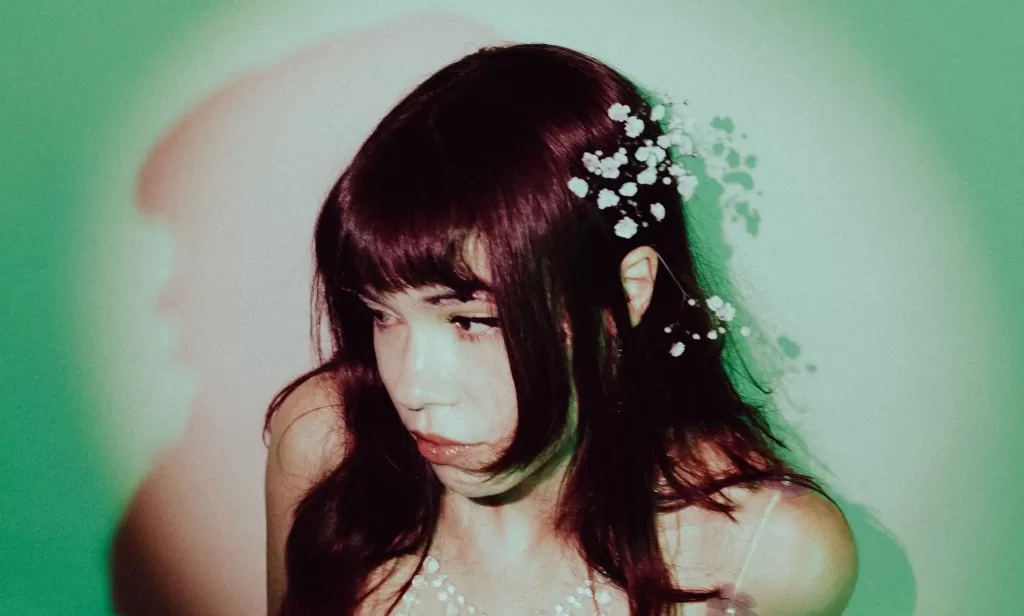
Mia Rasmussen, better known as Temachii, is a multi-instrumentalist and self-producing artist based out of San Antonio, Texas. She has released two albums, “flora maniia” and “akrasiia,” and recently opened for Wisp on her tour, “If Not Winter,” alongside Dream, Ivory.
SB: How does it feel to wrap up the tour with Wisp last month?
MR: It was my first big tour. I hadn't played any shows outside of Texas, so [it was] super exciting, and I had a lot of fun. Both Dream, Ivory and Wisp were super nice and amazing. I was very blessed to have done a first tour with them.
 SB: Are there any specific venues [in Texas] where you have performed that really stood out to you, or that are really near and dear to your heart?
MR: I really liked playing the House of Blues in Houston, and I loved Tulips in Dallas-Fort Worth. That was a really nice venue, and super kind people [attended], but all the venues in Texas were pretty good. I don't think I have an issue with any of them.
SB: This year was your first time you had headlined shows, one in San Antonio and then another one in LA. Can you tell me about the experience of going from an opener to being the headliner of your own show?
MR: Yeah, it's totally different. Night and day. Being an opener [versus] a headliner. I loved being with Wisp, and they were amazing, but it was so shocking to me when, even just those two shows, that [headlined]. It's so jarring to see everyone [is there] just for you. That was something I wasn't used to, but it was very flattering.
SB: How was it like to have a crowd know your songs and sing along to things that you wrote in your room?
MR: I never thought that would happen. When I first started making music, it was just for fun. I wasn't planning on making it into a career. I was still in college when I started making music, and it was just something I wanted to do, like how I love to draw. I was friends with a lot of musicians, and I was in Band growing up, and [my friends] heard I could sing, and they were like, “oh, you should just try and make your own music. I think you'd be good. Your voice is super nice…” I treated it how [I did] my art, just something [for] self-expression [and] enjoyment. To see how far it's reached people, it's something I never imagined would happen.
SB: How do you feel collaboration has helped you throughout your [musical journey], especially with collaborators like Gabe Jimenez?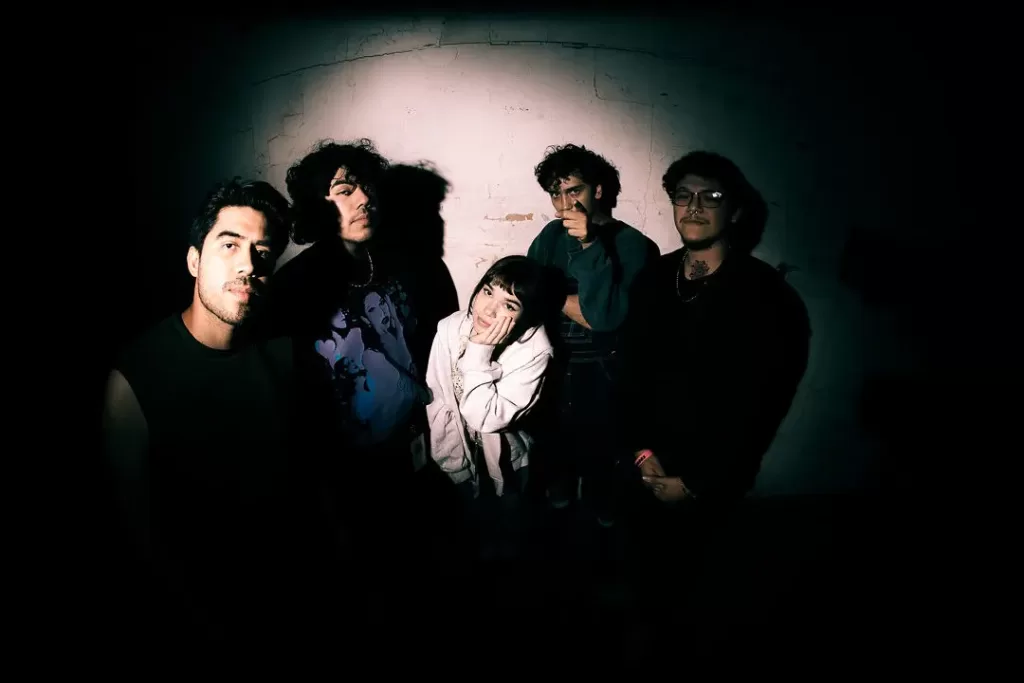
MR: I think collaboration is super important, especially in music, but in most art-related things, it's good to have different perspectives and different views impacting your art. Even though I write a majority of my music, I'm not amazing at everything… that's where Gabe would come in. He's a good friend of mine… [he’s a] super amazing guitarist and bassist… I would reach out to Gabe, and he would come and record for me, or even sometimes help me write stuff.
SB: - You started work on your first album, “flora maniia,” in 2020. How did the pandemic affect your workflow and lead to the release of your album 3 years later?
MR: [The pandemic] definitely gave me more time to do it because we were all at home, and I was working at a grocery store when I was making that album, and that's where I met everyone. That's where I met Gabe. That's where I met my engineer, Pedro. He [helped when we] recorded, mixed, and mastered all of my songs that are on Spotify right now. During the pandemic, being a grocery store worker was an essential worker, so we were just around each other all the time, and we were all musicians, and that's how we connected.
SB: Were there any challenges or roadblocks you had to overcome throughout the process of “flora maniia?”
RM: Since everything was recorded in a home studio [during] Covid, we didn't really have access to… drums. I think live drums sound so good… I didn't have a lot of money, so just [trying to find a] really good drum machine [and] trying to make sounds that were not real [like] drums or piano… sound really good, even if it's just a digital machine on a program.
SB: How much of the production is live compared to synthetic?
MR: Usually, all guitars are live. Bass is live. MIDI is recorded on a MIDI synth. For “akrasiia,” I just wanted something super stripped back and acoustic. It was just what I was feeling to make now… When we start touching it up and adding drums or other textural sounds, [that] is when we start adding synthetic sounds.
SB: One of your standout tracks [off “flora mania”] is “Born Into.” I really love [that you] use your voice as an instrument… How many tracks of vocals does it take to get that intended effect?
MR: “Born Into” didn't really have too many [vocal tracks]. How I started that song is I first laid down the chords with MIDI. I would [create] chords on the piano, but I knew I wanted the song to just be my vocals… I wanted to make sure I got the melodies I wanted out first, and then I [recorded] each note of the chord I laid out and sung that note. I think maybe five or six layers of my vocals to achieve that.
SB: Who are some of the artists that come to mind that you play on rotation when you're in this [musical] workflow?
MR: Bjork and Ichicko [Aoba,] I love them, and I listen to them constantly. I love all kinds of genres… Even if you just look at my first song, “Echoing,” it's kind of more electronic, but… I love heavier stuff, I love electronic, I love jazz, I love bossa nova, I love rock… I listen to everything.
At the time of making “flora maniia” and “akrasiia,” I was listening to a lot of Radiohead, a lot of Fiona Apple, and Mitski at the time. I didn't really know what Shoegaze or Dream Pop was, which is what a lot of people like to describe my music as… so then I started listening to Cocteau Twins, Autumn’s Grey Solace, Alison’s Halo, or Slowdive… I think that's interesting to me that I didn't even know of those genres, but I was kind of making songs within [them].
SB: - After “flora maniia,” you released your follow-up project “akrasiia.” Between projects, you shifted from a dream pop/shoegaze sound to a more ethereal/ambient direction? What informed this change in sound and the addition of purely instrumental tracks?
MR: After I released “flora maniia,” I just really wanted to make some songs that were very minimal, just acoustic guitar. Not that they're simple, but just not a lot of production. It's really just guitar, bass, or even for the instrumental tracks, just to try and convey a feeling.
SB: What would you say was the song that really stood out to you as being hard to produce? Especially [given] how complex some of the instrumentation is on “akrasiia.”
MR: Anything with my piano, so “nepenthe” or “do you remember,” even “stupid piano” off “flora maniia” … those were harder specifically because my piano's out of tune… I think it's [tuned to] around 432 Hz… For “stupid piano,” we had to digitally tune my voice to make sure it was [in tune] with the piano as well as all the other instruments. Then, [we did the] same thing with the songs on “akrasiia,” making sure everything fits the tune that my piano is [currently in].
SB: Is there a story behind how you got [your detuned] piano and how it came into your possession?
MR: When I was growing up, the first instrument I learned was piano… I was just [learning] on this really small digital piano I had, so then my parents [brought me] to a thrift store in middle school, and there was a piano there, and that's the one I bought, and we just never ended up tuning it… you need to do multiple tuning sessions to get it to standard tuning, so it's only [been] tuned once and then never again, which is probably why it's out of tune [still].
SB: - Not only are you a musician, but you also produce a lot of visual art. What was it like being a freelance artist before making the transition into music?
MR: I've been making art ever since I was really little. I just knew I wanted my art and music to be connected. I just felt that was natural, like they would go hand in hand. I started to make visuals for my music as well as try to build a little world. I was really inspired by Gorillaz or Studio Killers, where they have little characters… [I thought,] “I guess I could do that,” and I didn't delve too deep into it. I just made a caricature of myself, rather than like a whole new character that looks completely different for me.
 SB: Can you kind of walk me through the rollout for Not/Lost… [with this] surreal and kind of cool and trippy imagery?
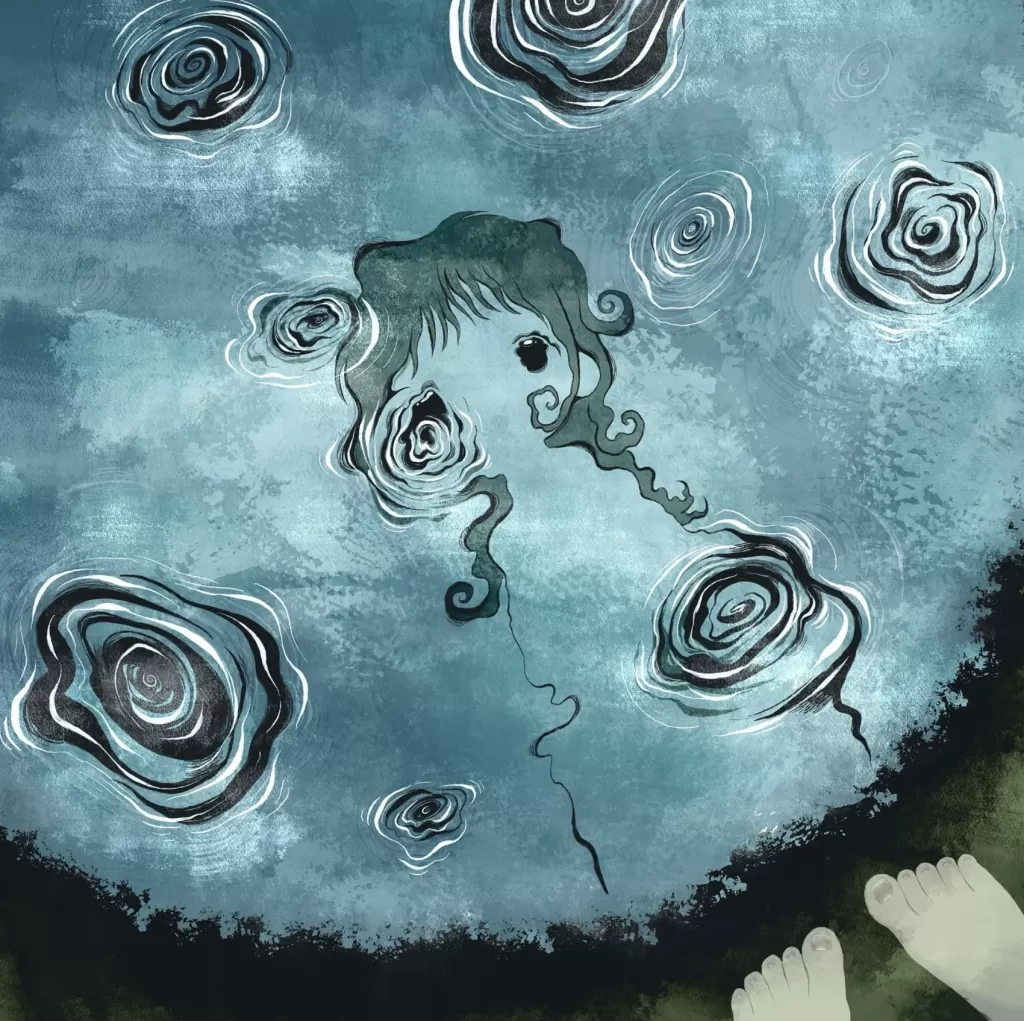
MR: I've obviously been working on new music, trying to get it the best that it can be. When I wanted to release “Not/Lost,” I wanted to tease a new era. I still plan on doing a lot of nature [themes] because I love nature, but shift it from forestry imagery [towards] a little more water… I made a little comic of the Temachii character in the forest, but finding a pond.
SB: What is your favorite medium: drawing, painting, animation, or digital art?
MR: Either painting or sculpting. I got into sculpting from when I was still in college. I took a 3D art course, so we did a lot of sculpting with many different materials, and I didn't think I would enjoy it as much as I did, but I really did, which is why I made that Little Lamb sculpture, and I want to make more… I tend to do mostly digital because it's very convenient, easy to do, cheap… so I tend to do that more, but whenever I have time, I love to do either painting or sculpting.
SB: What was it like balancing school and making music/art?
MR: It started to get more difficult as I gained more popularity, just because… more opportunities came my way, which I was super thankful for, but then that meant playing more shows and rehearsals, traveling more… I was also still working at the grocery store, so I was getting worn thin. I do find I have less time to draw nowadays, but I still always try and make time, and it's still something I'm super thankful for the opportunities I have that I would never thought I would get.
SB: I'm assuming you probably receive a lot of fan art. Is there any specific fan art that comes to mind that was really meaningful or special for you?
MR: Yeah, I love getting tagged in stuff… my favorite is when someone gives me something physical. I've had many pieces of art, whether it's a drawing or even jewelry given to me… at shows, that's my favorite. I obviously hold on to them, and I find physical things very… amazing, very beautiful.
SB: I believe you had said that you [refer to your] fanbase as Teminions. What is the inspiration behind this?
MR: It was just one of my good friends. We always make little jokes when we're hanging out, and he invented the phrase Teminions. And he's like, “you should call your fans the Teminions.” At first I hated it, I was like, “no, that sounds so silly.” Then… the silliness grew on me, so then I was like, “Okay, I'll embrace it.” They're the Teminions.
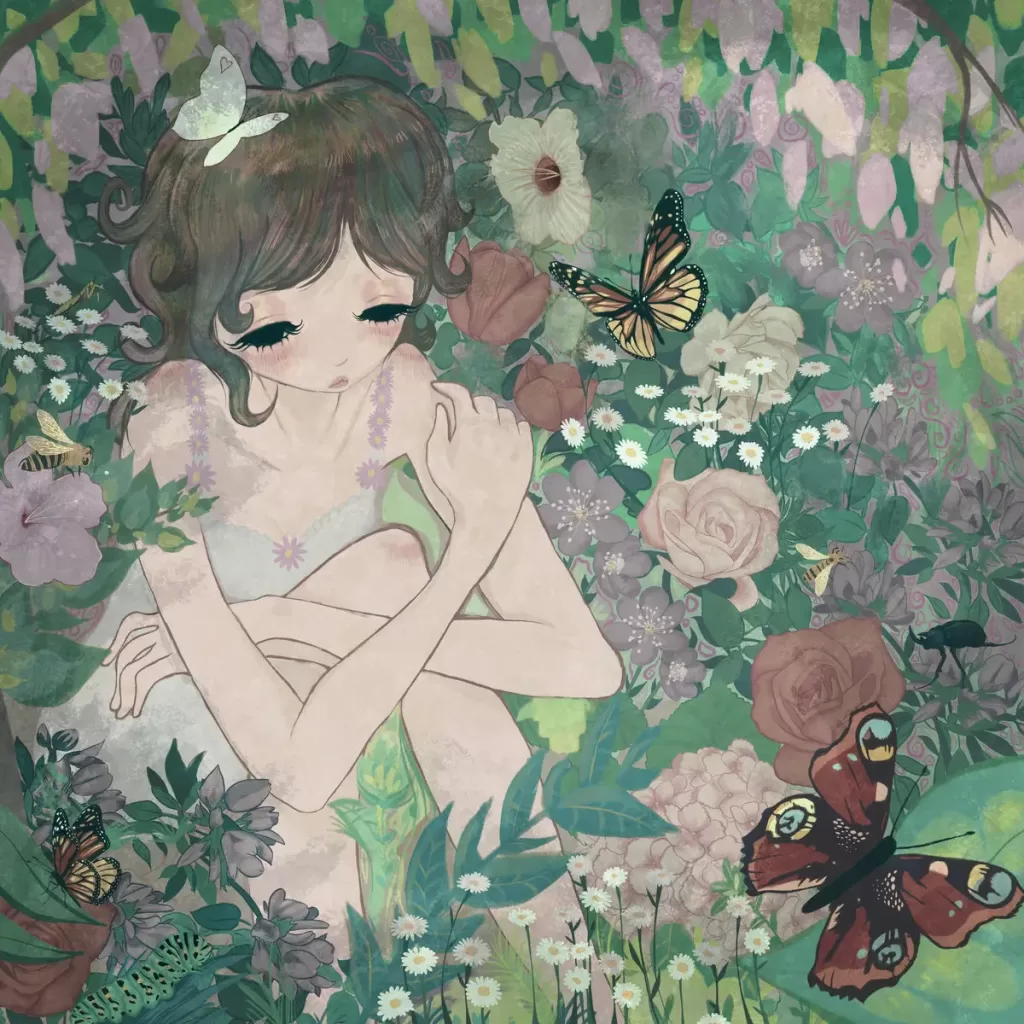
SB: Recently, HunkofPlastic Records just pressed your album, “flora maniia,” on vinyl. How does it feel to be able to hold your work in your hands?
MR: Yes, they did. That is the first time any of my songs are on vinyl, which is so exciting… It feels surreal… Everything that I've done [between] touring, performing at venues, meeting fans, having a vinyl is something I never predicted would have happened… I didn't get to see too much of the process. They're still being shipped to me… [HunkofPlastic Records is a] small label, so it takes them a while, but I'm super thankful they did that for me.
SB: You have produced all the album cover art for your music. Do you have a favorite cover you've made?
MR: “Flora maniia” for sure. That one took me the longest. It took me a few months to make it, which is the longest I've taken on any piece of drawing, especially digital. I'm doing the same, obviously for future releases… If it's an album, [I like] to put a lot of detail into the artwork.
SB: - Does the surreal imagery of your visual artwork ever transform itself into a song?
MR: For me, usually the song comes first, and then when I listen to the song… I create the visuals. I've yet to make a drawing and then make a song, but that's probably something I'll explore eventually.
SB: One of your songs, “a lamb’s lullaby,” was turned into a variety of different art pieces. Can you talk about that process more?
MR: After I released “flora maniia,” I really wanted to make a bunch of physical pieces… so that I could do a gallery based off of each song… I kept doing “a lamb’s lullaby” because that one is one of my favorite songs from that project.
I would make a piece and then people would reach out to me, wanting to buy it, so then I would sell it, and then I'm like, “I don't have a piece for this gallery I want to do anymore…” I do hope eventually, even if it's ten years from now, I want to have a little gallery showing [work] based off my songs.
It would be in Texas, but if I ever got the ability [to put it on, it would] be in multiple places… I just imagine a little space and just all of my artwork would be there… to fit the “flora maniia” themes… I could see myself doing a little live performance along with it, but I for sure see it like how a normal gallery would be for [other] artists. You see other pieces on the wall, you walk through it, and experience it.
SB: You also design your own merch. Are there any specific merch pieces you've made that you’re really proud of?
MR: I really love the rib cage design… there's nothing specific about it, I just really like the design idea for it.
I love designing merch… I tend to change the designs a lot just because it's so [much] fun for me… In the beginning, I [screen printed every shirt], but now it's gotten to a point where it's just too much [demand], so I do need to outsource.
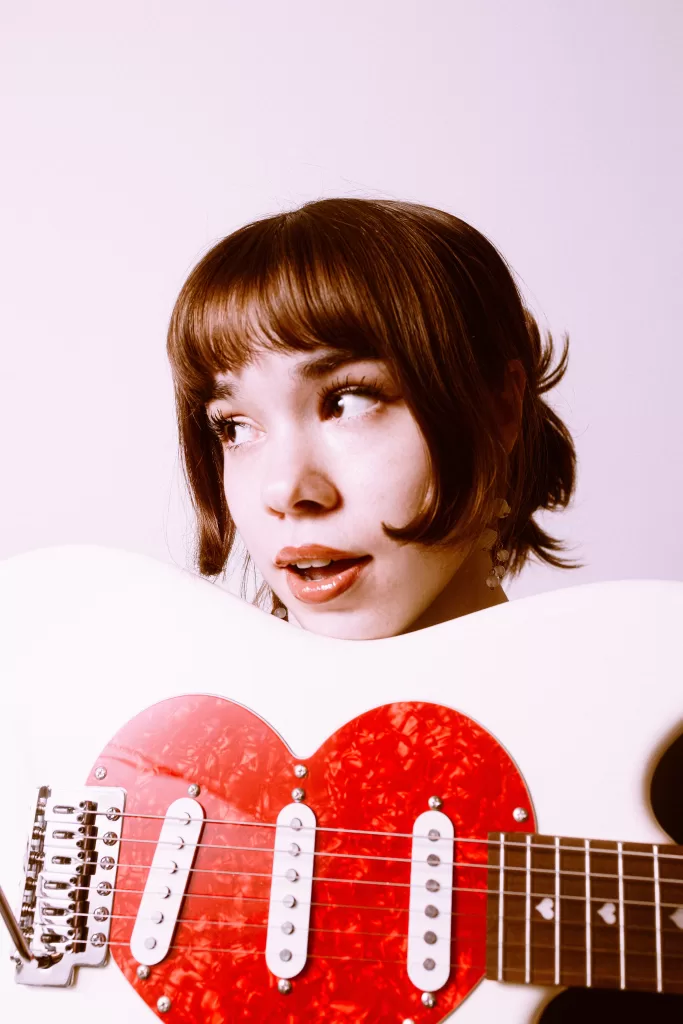 SB: - Throughout your performances, you have an array of unique-looking instruments such as a heart-shaped guitar or a butterfly bass. Is there a story behind any of these designs?
MR: I didn't know how to play a guitar when I was first making music, but when I first started [working on] “flora maniia…” I picked up guitar and… started teaching myself guitar. When choosing a guitar, my only logic was I want it to look really cool because the cooler the guitar looks, the more likely I'm going to want to pick it up and play around with it… The first one I ever got was the little heart guitar, and then I got the butterfly bass because I needed a bass to [play] on my songs as well.
As I’ve gotten better at guitar [started] caring more about its tone… I still care about the way it looks. I have a floral design one, a watery [looking] one, but different models, I have a Jazzmaster now [and a] Strat.
SB: What would you say is the most atypical instrument you play?
MR: I don't play it often anymore, but I do have a song on “akrasiia” that has banjos. It's not the weirdest instrument, but I don't really pick it up too often. I just wanted a song with the banjo, so I have a banjo. I play it every now and then.
SB: You have amassed a large social media presence since your first album. How has a platform like TikTok affected your music career?
MR: It's 100% what gave me what I have now. I feel every artist feels this, where no artist really likes to post and promote their stuff… but without TikTok, I wouldn't have gotten the attention I have now, it's the reason why my songs blew up, and so I'm very grateful for that. I haven't experienced that on other social media platforms, YouTube or Instagram. I do have followings there, but to me, it's mostly because my songs blew up on TikTok, so then it trickled down to the other social media platforms.
Because of my songs blowing up on TikTok, I've met so many talented musicians: Wisp, Dream, Ivory, [and] Kitty Craft. Those are all people I listened to before I even [started] making music. So it was just crazy now we're in the same room… [and] friends.
SB: Can we expect a new project from you soon?
MR: Yes, I've been working on [a new project] since “flora maniia” released… I'm just struggling with the pressure… When I made “akrasiia,” I didn't have [this attention], so I was able to release it pretty quickly, but now I feel I have to make [this project] the best that it can be… It should be done soon. I am working very hard on it for everyone.
SB: Are you going to [perform] any shows in the future in Houston, Texas?
MR: I will for sure… nothing for the rest of this year, but next year for sure. I'm going to keep performing and playing shows all over [Texas]. I love playing Houston, so I will definitely be back.